

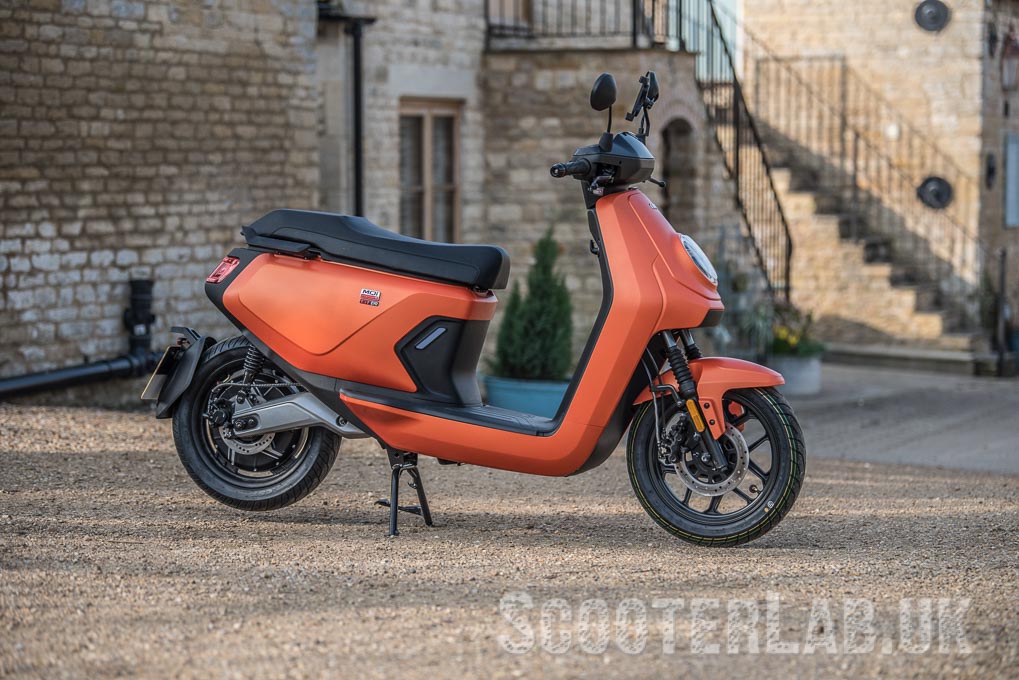
I think you’ll agree, the 2022 model looks great, it also has some tech features that put it up there with the best of them and has the kind of performance that make it much more practical for the average rider. Let’s have a look at it in a bit more detail…

Battery and motor
The 2022 model is based on the GT platform but now comes with Niu 4th generation dual removable lithium-ion batteries equating to 72v and it runs on a 6500W Niu V motor.
Charging
If you’re lucky enough to be able to park your scooter close to a conventional 3-pin socket you can charge the twin batteries in situ in around 5 hours. If not, you can simply unplug them and carry them inside to be charged. The batteries weigh 14kg each so you can use them as part of your daily keep fit routine. One downside to having the two bulky batteries beneath the seat is that they take up most of the storage space so a top box is probably a good idea.
How much to charge?
According to Niu it costs around £1.69 to charge the scooter and for that you’ll get up to 46 miles (depending on terrain, temperature and riding style). With soaring energy prices that cost is likely to go up (the same goes for petrol).
Riding modes
As is customary on electric scooters there are three riding modes to choose from: Eco, which drops the speed to around 30mph and extends range, Dynamic which has a top speed of 45mph, or Sport which gives you full power and 62mph. Rider modes are selected using the button on the right handlebar. You also get a reverse.
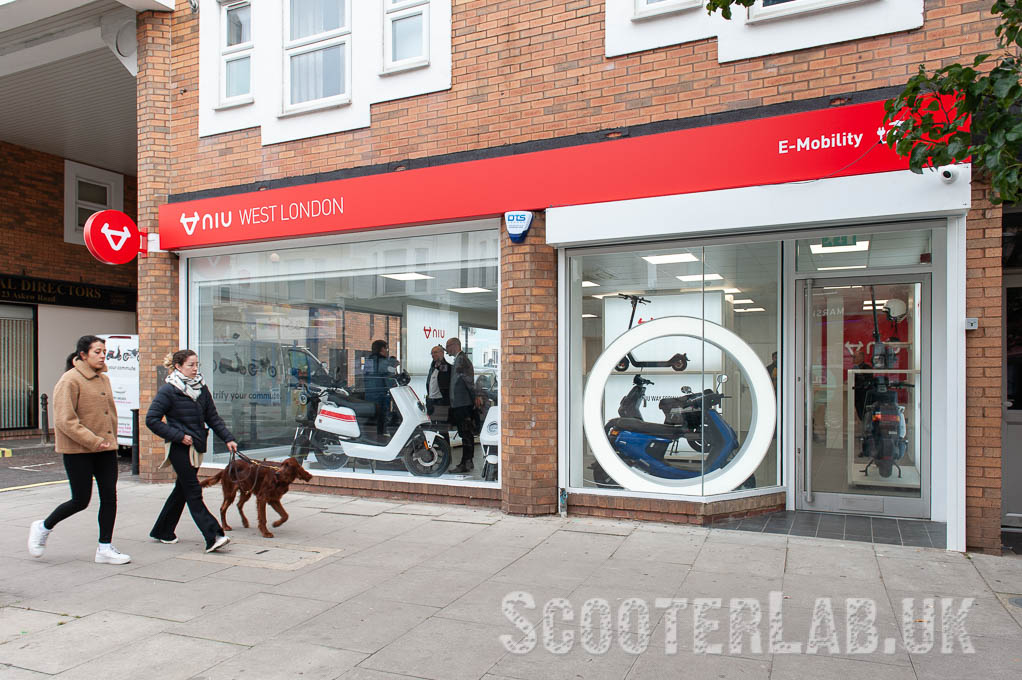
Niu are well established around the world so you should never be too far from a dealer, they also have Niu Flagship stores in various cities. In the UK you can find them in Edinburgh, Dublin, Hull, Bristol and London. Check out the dealer locator here to find the nearest in your part of the world.
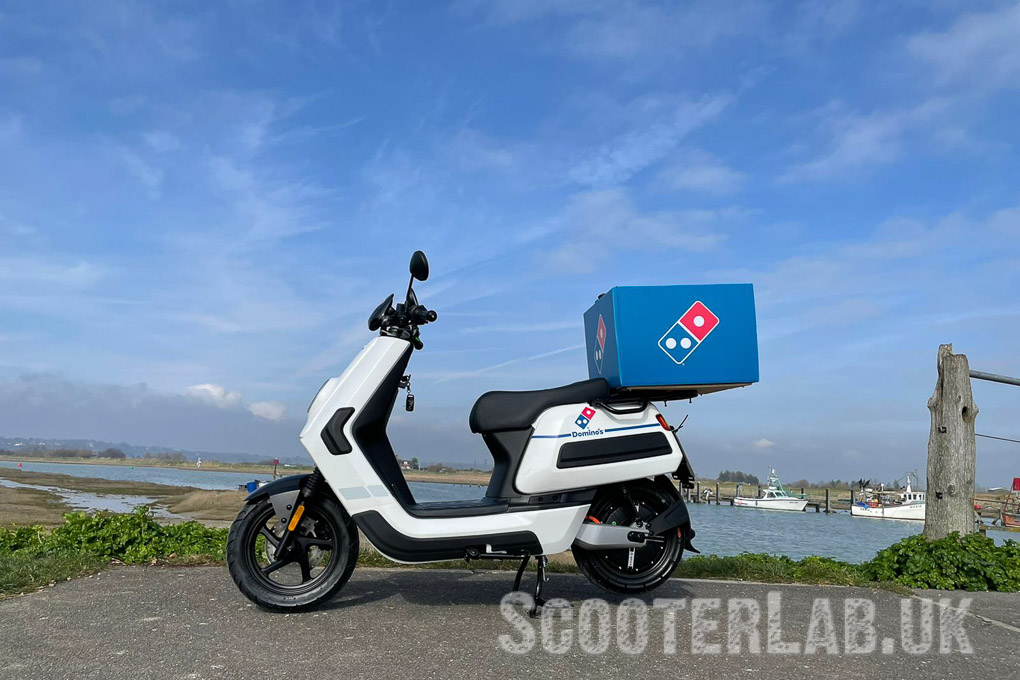
It’s worth noting that there’s a special ‘Cargo’ version of this scooter (priced at £4199) with beefed-up chassis, a shorter seat and the option to add various load-carrying boxes and racks. Some couriers are already using Niu and I’m sure the company will be happy to speak to any fleet management people who are looking to upgrade or swap over from petrol.

Chassis/brakes/suspension
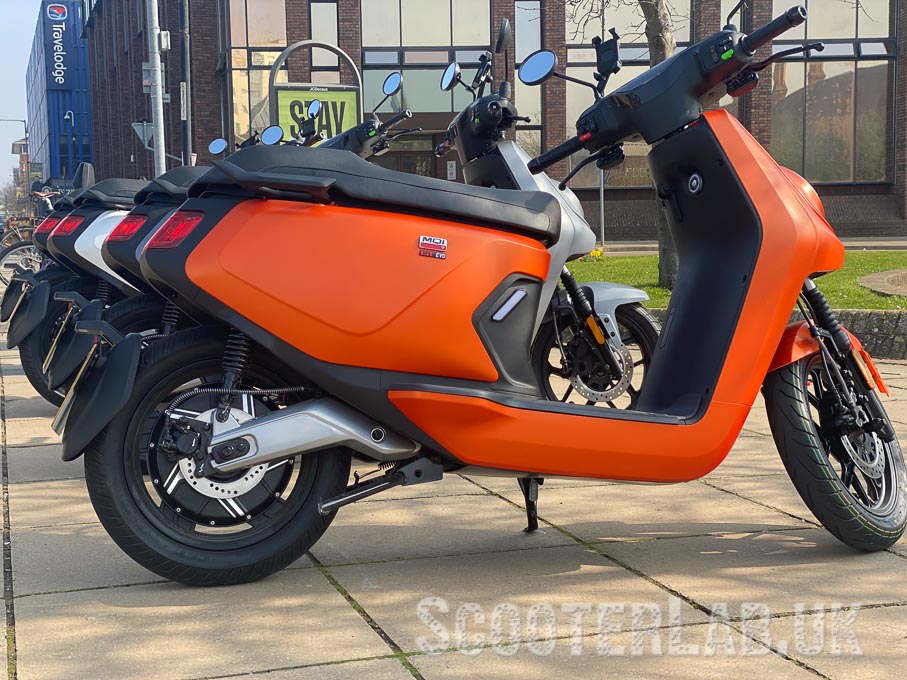
The new Niu is built on a steel chassis, it runs on tasty-looking 14″ multi-spoke wheels for added stability, it also has twin rear shocks and comes equipped with 220mm/180mm disc brakes front and rear. The brakes are EBS – Electronic Braking System rather than ABS, which means they’re linked to offer optimum front and rear braking pressure using the left-hand rear lever only. The front lever operates the front brake on its own. The brakes also offer some regenerative charging for the batteries.

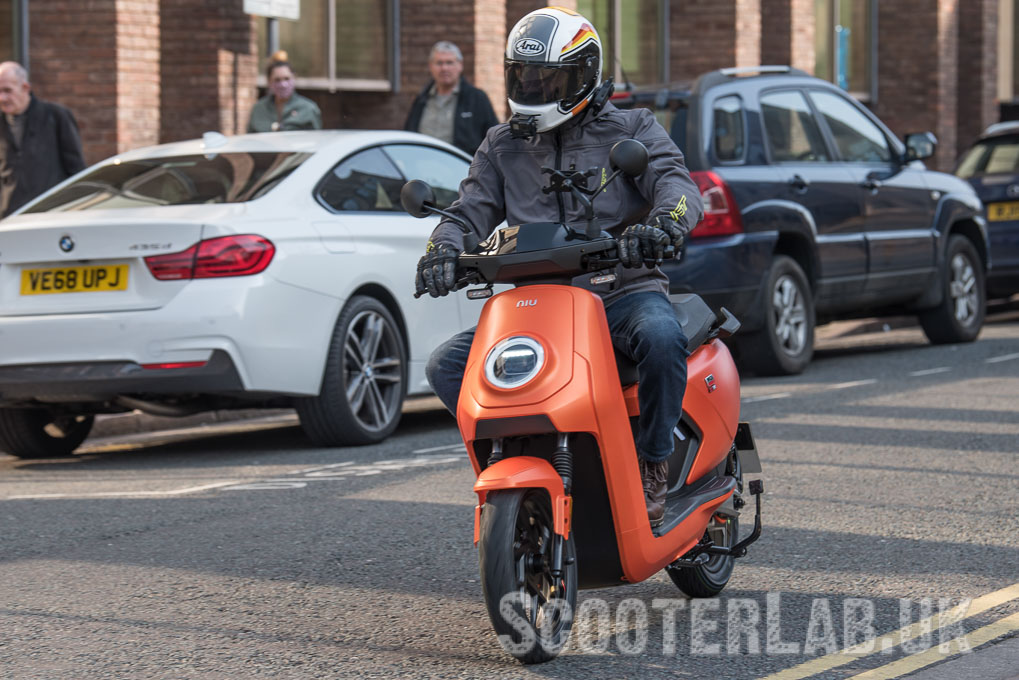
From the front, Niu scooters are easily recognised thanks to their distinctive halo headlight. As you’d expect, they use LED lighting all around and that includes a couple of angled sidelights placed just below the front of the seat. Niu boasts “360º illumination” for the MQi GT Evo and you can’t really argue, they have made an effort to make sure you and your scooter are seen. Their 3rd generation lighting offers “wider, safer and more efficient lighting” although we only got to ride them in bright sunshine around Peterborough on the launch so can’t tell you how good the lights actually are.
Four colours
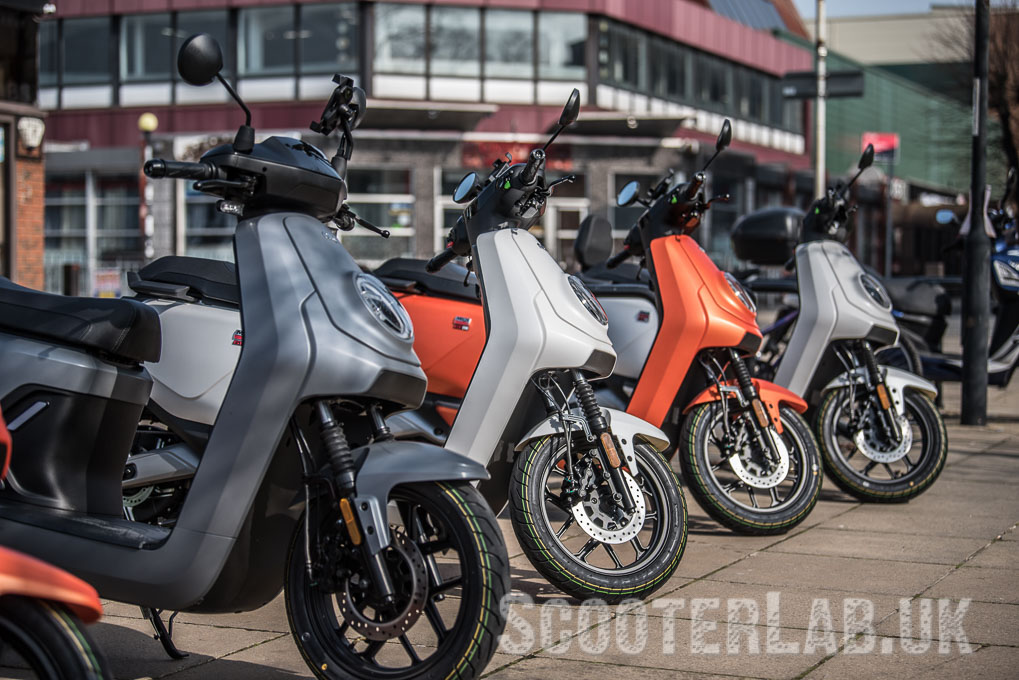
The MQi GT comes in a choice of four colours, matt orange, matt grey, white and black.
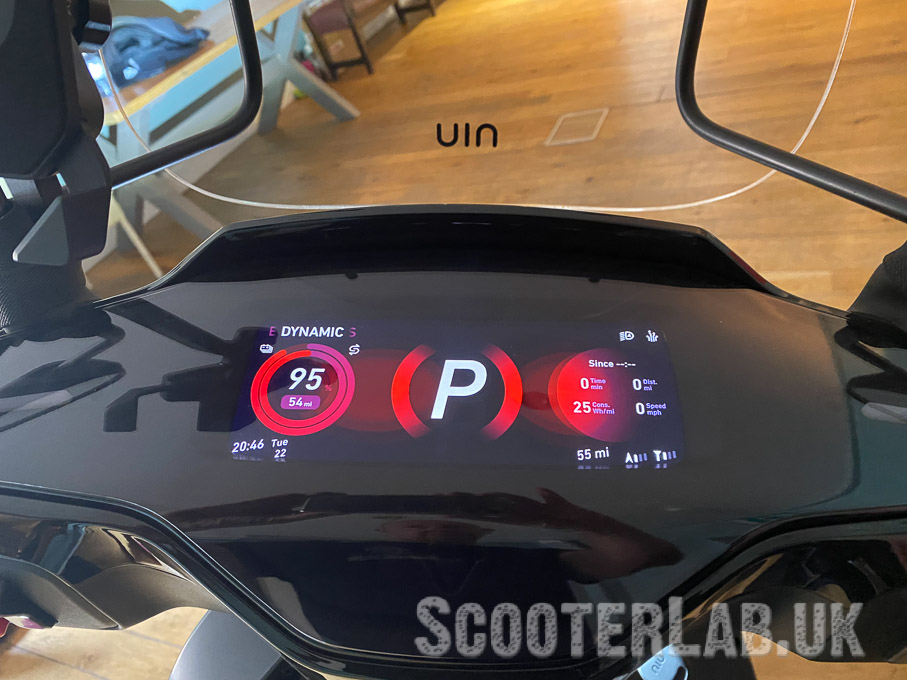
Of course, a modern scooter wouldn’t be complete without a smart multi-coloured LCD/TFT dash. The Niu has a large, easy to read instrument panel with loads of info available. It can also be customised with a choice of three different designs and it links up to the Niu app giving full connectivity. The app gives statistics on past journeys and routes. It will also tell you what percentage of battery you have left and you can turn the scooter on and off using your mobile.
Tracking
One very useful addition to the app is the tracking feature. It’ll provide real-time location of your scooter, notify you if the scooter is moved and allow you to track it if it gets stolen.
Keyless
The current trend is to build scooters with Bluetooth keyless ignition. This one comes with the tech.
First impressions
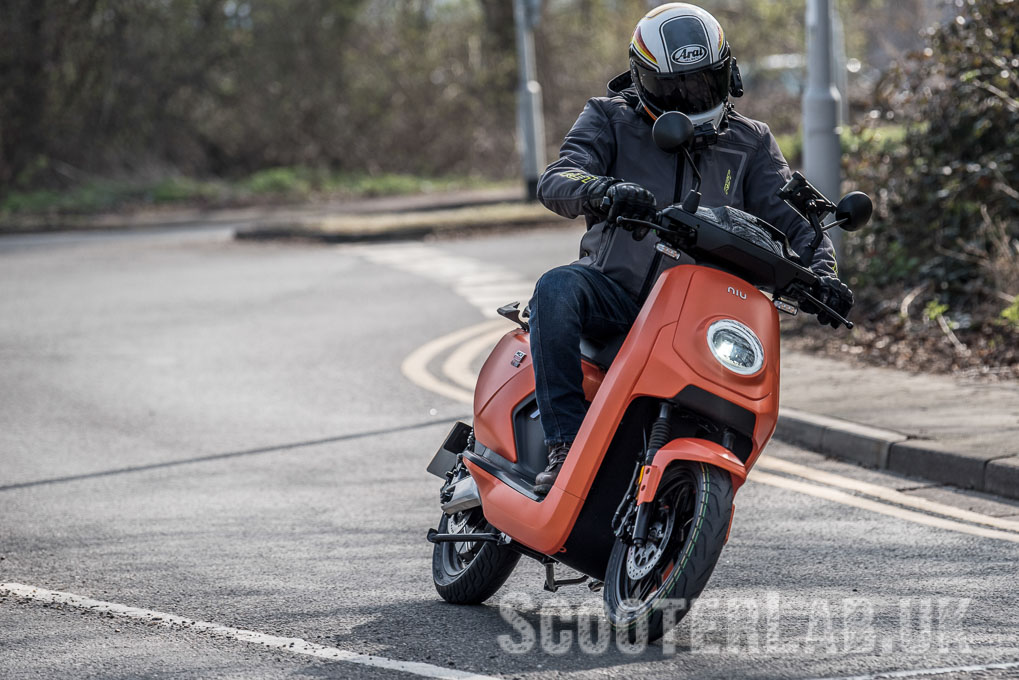
My first impressions of the MQi GT Evo when I saw it up close were that it’s a good looking, well put together scooter with a quality feel to it and I’d say that’s pretty much how I felt after our road test.
Armed with a remote key fob for the scooter you can lock and unlock it, then simply pull in a brake and press what would have been the starter button. The ‘ready’ light on the dash illuminates and you can select one of the three-rider modes. ‘Dynamic’ is default but like most people we rode it in full-power Sports mode. Switching is done by the mode button.
The seating position is comfortable, flat floorboards give you enough room to not feel too cramped and the dual seat can also take a passenger if required. The seat height is quite tall at 816mm but it doesn’t feel too high thanks to the narrow front profile of the seat and not overly wide floorboards.
By their very nature, electric scooters tend to be a little on the lardy side and at 128kg this scooter is no exception. The Niu is 27kg’s heavier than a petrol Yamaha D’elight 125. Even so, the Niu didn’t feel top-heavy or hard to shift around so it’s always worth having a sit on a scooter at a dealer before ruling it out on the spec sheet alone. The Niu compares well on weight with most other electric scooters we’ve ridden. Although the Silence S01 weighs in at 151kg’s. That scooter does have an impressive 80-mile range though.
Quick enough?
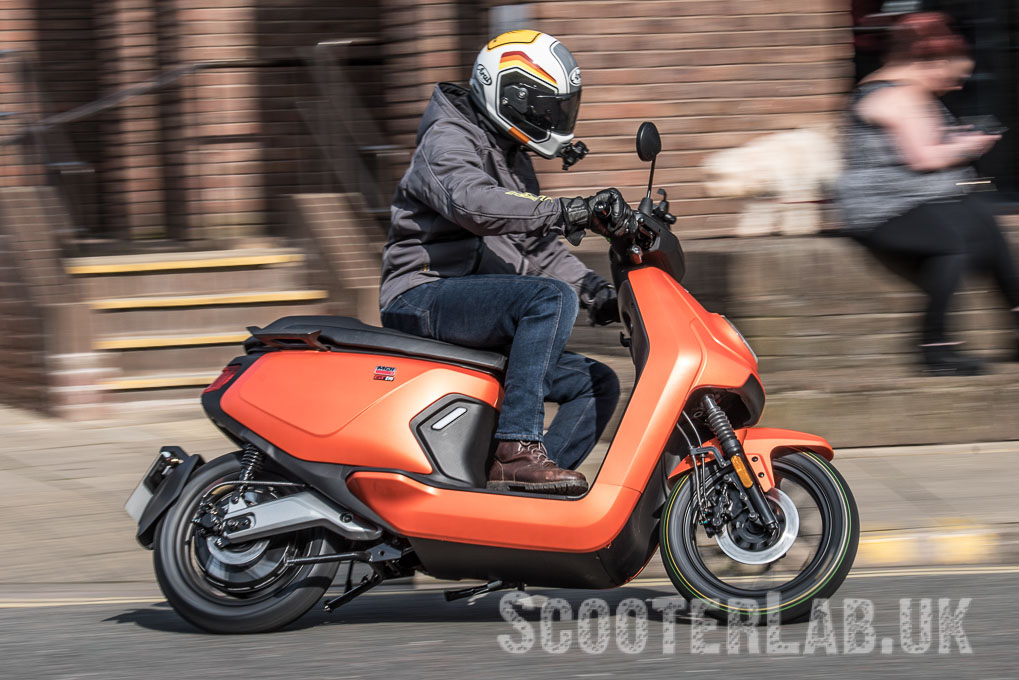
If you’ve ridden an electric scooter then you’ll know that they can usually out-perform a petrol equivalent. The Niu MQi is no different. It’s the quickest, most powerful scooter Niu have made so far. Don’t let those claims scare you though if you’re a new or nervous rider. Remember this is still only comparable to a 125cc petrol scooter. Yes, it’ll accelerate well from a standing start and will quickly reach its maximum 62mph but it won’t turn your brains to jelly or rip your arms out of their sockets. It also has the options of Eco and Dynamic modes if you want a little less grunt and top-end performance.
Personally, I’d always choose a 125cc (or electric equivalent) rather than a lower-powered scooter. The extra power means you can get yourself out of trouble, and accelerate away from traffic lights quicker than most cars, you can ride on faster roads and dual carriageways (as well as motorways with a full licence). It’s just a much more enjoyable and safer way to travel.
During our test ride we hit a section of dual carriageway. No problem though, I was able to accelerate and join the road safely and saw the speedo creeping up to an indicated 71mph. It didn’t seem to be electronically limited to Niu’s claimed 62mph top speed either, which is a good thing.
Peaceful
One thing you notice when you first jump on an electric scooter is that the things you wouldn’t usually hear sound loud and clunky, like the forks compressing over bumps in the road, the sound of the tyres on tarmac, the whistle of the wind. Or the centre stand scraping the ground whilst cornering. That’s because there’s no engine or exhaust note to muffle the noise. You can also hear people chatting as you ride by. It’s strange until you get used to it. Near silence is quite a serene place to be though.
Use the force
I still tend to use the brakes on a modern scooter like I would on my vintage Lambretta, using front and rear together (and one hand covering the clutch on the old two strokes). You don’t really need to though because, of course, the brakes are linked so most of your braking can be done with the left lever only. It’s only if you need to brake harder than usual that you have to give some extra force to the front brake. On the Niu I thought the brakes were really good, plenty of feel at the lever and more than enough stopping force. It’s good to see an electric scooter using a rear disc rather than the drum you find on many of them. Even the £6350 Vespa Elettrica only gets a drum rear and that scooter is only equivalent to a 50cc.
Whilst we’re talking about brakes, like many riders I’ll use a little rear brake to steady the scooter at slow speed whilst manoeuvring, or pulling away. Most electric scooters seem to lack finesse on the throttle if you touch the brakes whilst trying to move forwards. They tend to be a bit snatchy and jerky as you pull away. The Niu also suffers from this. Pull away without touching the brakes though and it’s as smooth as it should be so I found myself trying to adapt my riding style to suit. It’s a shame though because slow speed control is very important.
Cruise control
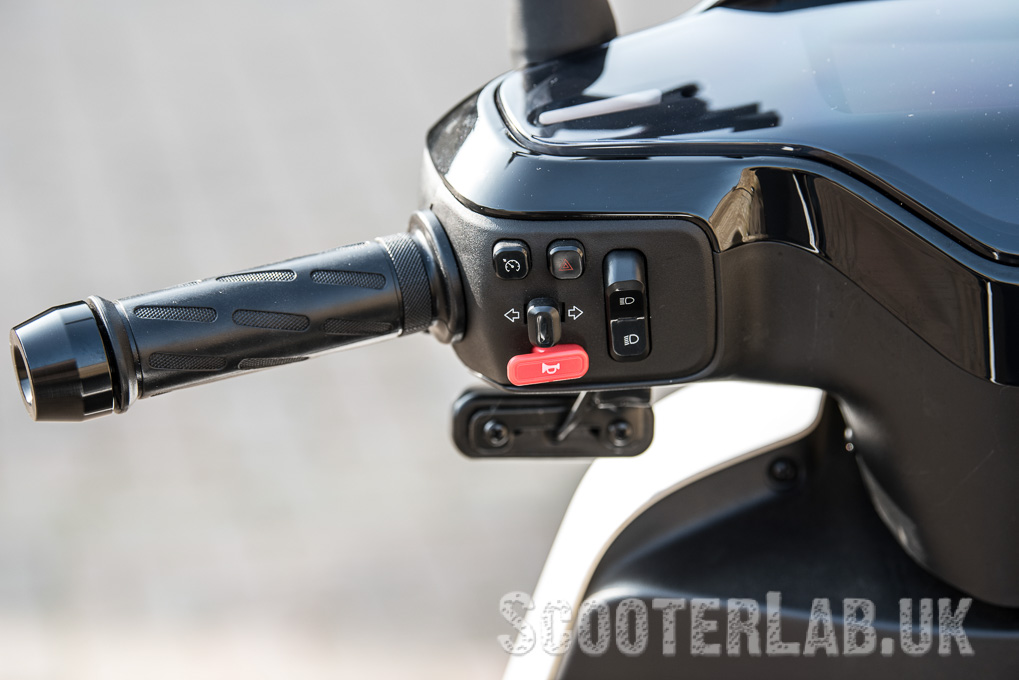
The left hand switchgear includes cruise control and hazard warning lights. I found myself catching the main beam switch or horn whilst trying to use the indicators but soon got used to the busy layout. I’m not a big fan of the front indicators, they’re bolted on beneath the switchgear but look a bit like an afterthought. Integrated indicators would have been a neater solution.
There’s also a USB charge point behind the legshields and Niu make a very good mirror mounted mobile phone holder for £29.99 (you can see it in some of the photos).
Are electric scooters still cost effective?
As a 125 equivalent, the Niu is more fun to ride than many conventional learner legal four stroke scooters. It’s also cheaper to run, although the recent energy price hikes mean electric scooters no longer run on fresh air so you do need to factor in how often you’re likely to need to charge it. Energy prices go up again on April 1st in the UK so we’re basing this on the quoted £1.69 per charge in March.
A decent 125 will use around 2 litres of fuel to cover the same distance as a full charge on the so is roughly twice as expensive to run as the Niu but petrol prices seem to have stabilised again at the minute.
Plug-in grant changes
In December 2021 the government announced unexpected changes to the plug-in grant scheme. Previously zero-emission motorcycles/scooters could get up to £1500 off the retail price. Under the new rules that figure is capped at £500 and just £150 for mopeds.
With rising energy costs and lower subsidies it’s a double-whammy for the booming electric vehicle market.
SLUK’s verdict
The Niu MQi GT Evo is a great addition to the Niu range. It looks and feels modern and has all the gadgets you need. It rides well and accelerates quickly. Ok, it may lack storage space thanks to the under-seat batteries but you can fit a rear rack (£59.99) and top box from the Niu accessories range (£144.99) to make it more practical. Also in the range is the mobile phone holder (£29.99) and tyre pressure monitors (£35.99). There’s also a screen, passenger backrest and no doubt a few other parts. For such a useable scooter I’d have liked a bit more range than the 47-miles quoted (we didn’t get chance to run the batteries down to test it) but I’m sure that’s enough for most of the target audience.
Sadly, buying and running a new electric scooter isn’t quite as affordable as it was before the Plug-In Grant was slashed but there’s not much we can do about that. Niu do have finance options though to help soften things. The scooter costs £4099 and with just £250 deposit this Niu can be yours for £88.13 per month.
If you want to know more you can check out their website here.
Words: Iggy
Photos & video: Too Fast Films
Licence category: A1
Voltage: 72v
Capacity: 26Ah x 2
Battery: 18650 lithium-ion
Battery tech: 4th gen Niu smart power tech
Motor: Niu V Motor
Rated power: 5,000W
Controller: FOC Vector controller
Range: 46 miles
Length: 700mm
Height: 1171mm
Wheelbase: 1380mm
Seat height: 816mm
Seat length: 782mm
Weight (inc. batteries): 128kg
Colour options: Matt orange, matt grey, white, black
Price: £4099 (inc Plug-In Grant)
Contact: Niu.com