

Lambretta Siluro
121mph is a lot for a 125cc engine, but back in 1951 it was incredible. As ever the drive to do this came from competition. Innocenti wanted their Lambretta to beat Piaggio’s great rival – the Vespa.
At the start of the 1950s when both firms had only been running less than a handful of years, they each sought to prove their superiority through sport.
The companies began to contest the 125cc top speed world record, quickly eclipsing motorcycle records using souped-up 2-stroke scooter engines.
To the victor the spoils
This is not a spoiler. Winner of this contest proved to be Lambretta.
Vespa had achieved over 107mph with their aluminium streamlined scooter using an incredibly complex opposed piston engine.
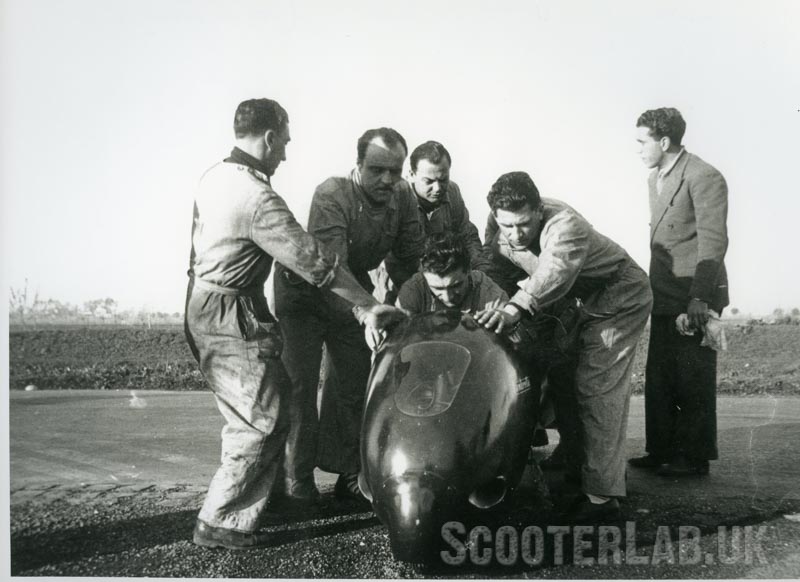
However, a little while later in 1951, Innocenti put the record out of Piaggio’s reach with a 201kmh (121mph) run by Romolo Ferri on a closed section of German autobahn between Munich and Ingolstadt.
How did Innocenti go so fast?
The answer is relatively simple. Aerodynamics and power.
Attaining the level required however, is not simple.
Several versions of the Lambretta streamliner were proposed with various riding positions. In the end this fully-enclosed Siluro (Torpedo) body was developed with elasticated flaps that closed when the rider crouched and withdrew his feet.
The only disruptions to the smooth shell are two front vents that channel air over the upright finned cylinder.
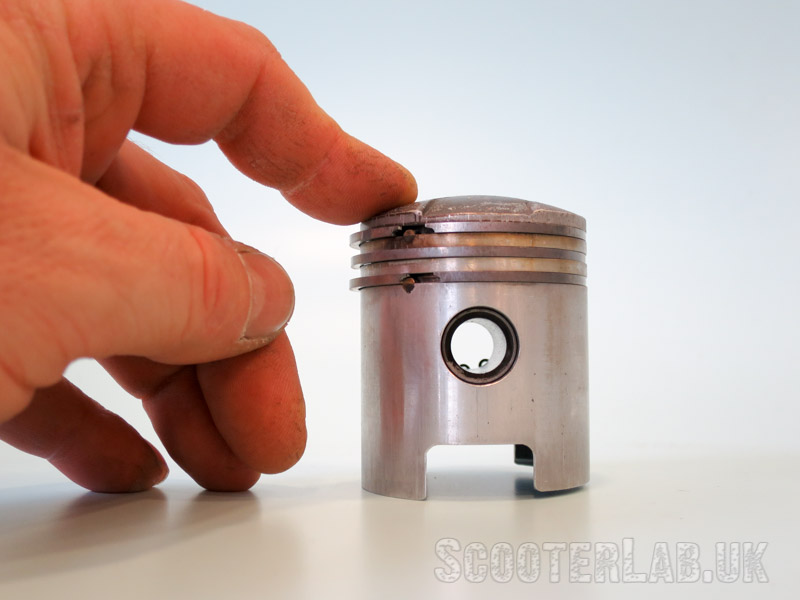
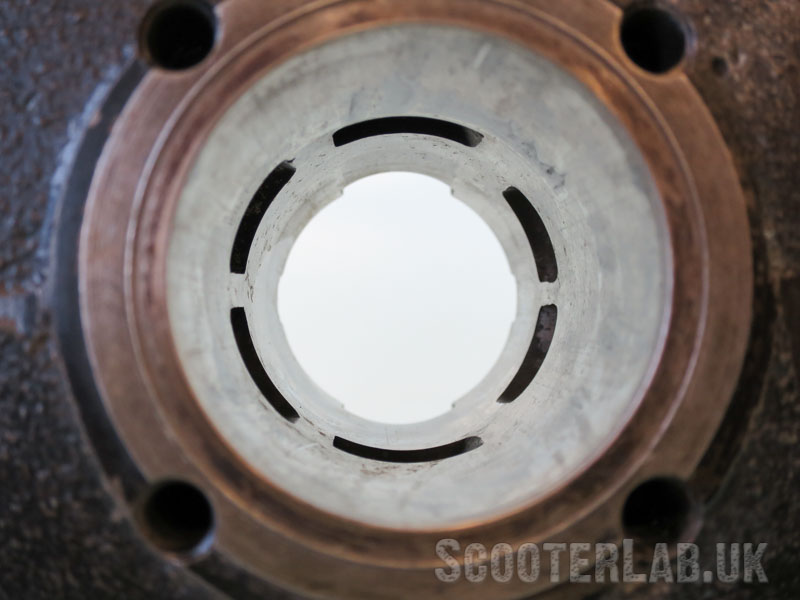
The engine is a sand-cast special, but still based very much on the Lambretta Model C layout used for production racing in events like Milan-Taranto.
The key to making more power was Innocenti’s own crankshaft-driven supercharger which blew more than 125cc of fuel and air into the engine every stroke.
Together with 18:1 compression and a high-octane alcohol fuel/oil mix the Lambretta engine eventually made 20.75hp at 9,700rpm.
Can they make it run again?
After the record
Shortly afterwards, another motorcycle racer called Renato Maggi was killed trying to retake the 125cc record for MV Agusta in a prone streamliner.
Maggi’s death caused all the firms involved in record breaking at that time to call an unofficial truce.
This left the Lambretta Siluro as the outright winner of this particular contest, so it was put proudly on display in the Innocenti offices.
Here was lipstick red evidence of the might of the Milanese factory and their engineers from Innocenti’s Centro Studi, lead by Pier Luigi Torre.
In the 60s
A decade later the streamliner was called up for one last starring role, as a moving prop for an Italian movie. All that was required was a ride-by in the background, but this meant making the historic machine more reliable and easier to start.
- For this job, the supercharger and battery-powered total loss ignition were removed. A standard magneto ignition was fitted in their place.
- A standard 20mm carburettor from a production Lambretta TV175 was fitted.
- A 3mm thick head gasket was added to reduce the compression for easier starting and to permit the use of petrol instead of alcohol.
After the closure of Innocenti the record breaker was purchased by the Panini family – famous for the football sticker books – and installed as part of their Umberto Panini Collection Motor Museum near Modena.
Revival
As we previously reported here, there are a couple of competing projects to create new Lambretta-based streamliners. Alongside those projects, Matteo Panini wished to get the original Siluro running again so he can pilot it as a demonstration.
Obviously, without the original supercharger the engine will be way down on its original 120mph potential, but quite how far down remains an interesting point.
Rimini Lambretta Centre were given the task of stripping and rebuilding the entire machine, with the instructions of making it ‘useable but without altering the originality of such an important piece of motorcycle history’. This work will run alongside the ‘New Lambretta Siluro’ project that veteran scooter racer Tony Tessier has already commissioned RLC to build for his record attempt to be held in 2017/8.
As the original Siluro will be shown at the Scooterist Meltdown event in Germany, initial work at Rimini was limited to stripping, checking and rebuilding the engine and fuel system to be able to get it back up running again. Half a century of silence was well and truly broken when this was achieved, as you can witness by the fearsome results in the accompanying video.
SLUK will be on hand as the work proceeds with the Panini Siluro over the coming months and we’ll publish exclusive pics and details about what exactly is inside as this takes place.
Sticky
For those who didn’t get an opportunity to see the Siluro at Bridlington last year, it will be heading to Germany as the RLC crew attend Scooterist Meltdown this coming weekend. At the event the plans are to fire up this incredible Lambretta!







Hello,
This is certainly an interesting article. The Panini Engine is No. 3S in the series. I am most interested in how it compares internally to engine No 4S which is in the Australian monotubo racer.
Regards,
Peter Shannon.