

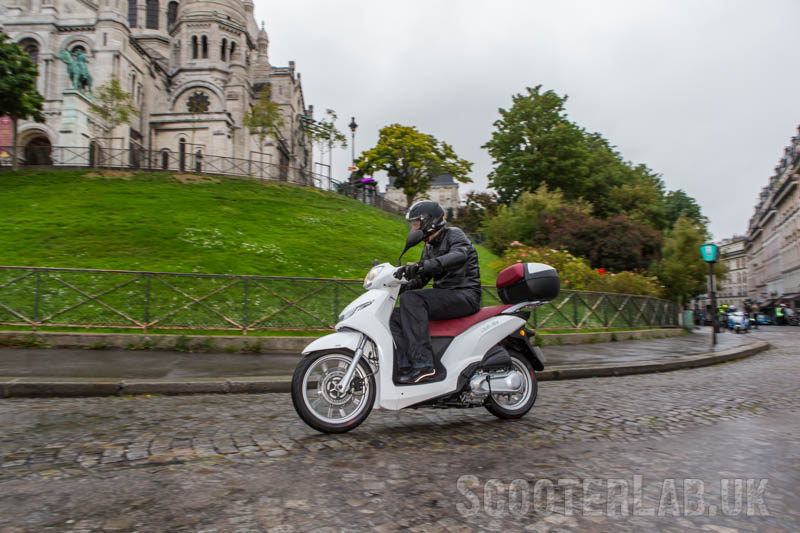
After a Peugeot Belville tour of the wet cobbled streets of Paris, Sticky finally concedes that there may be something in this high-wheeled scooter thing after all…
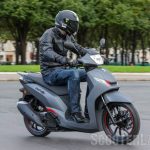
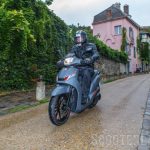
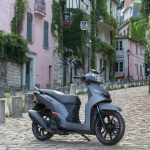
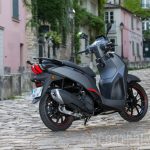
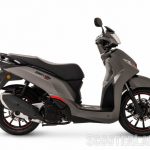
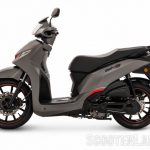
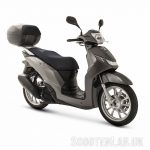
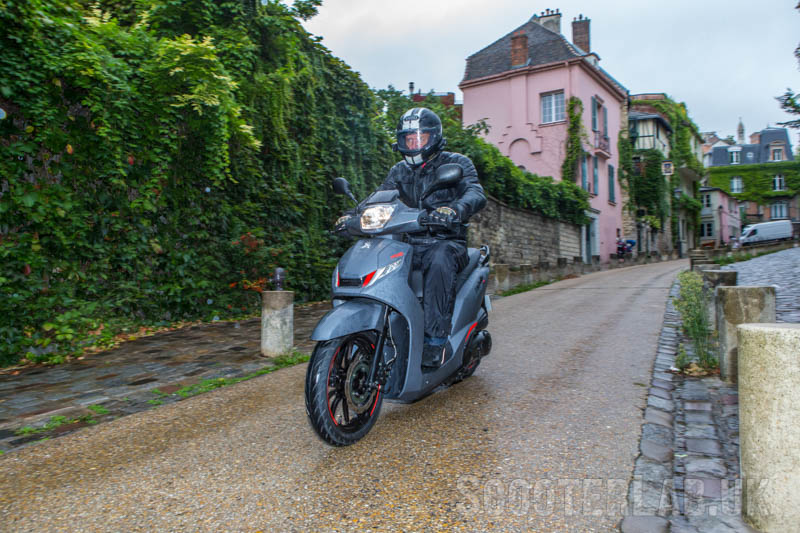
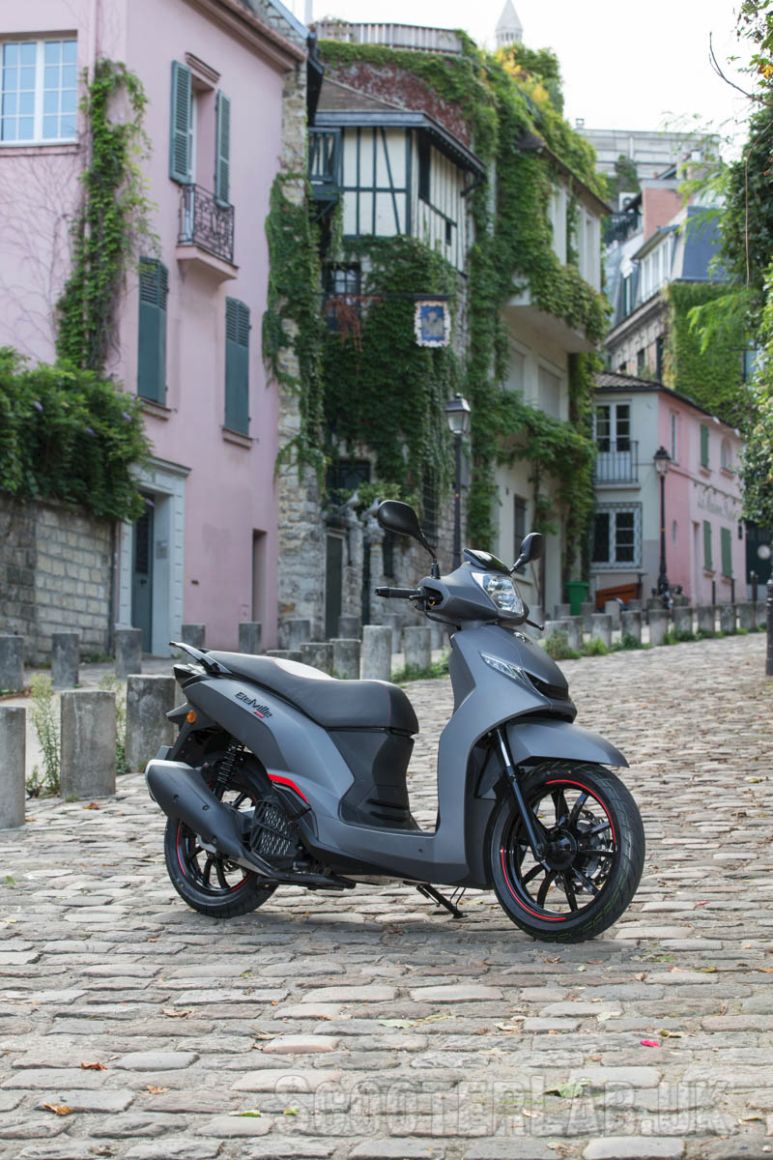
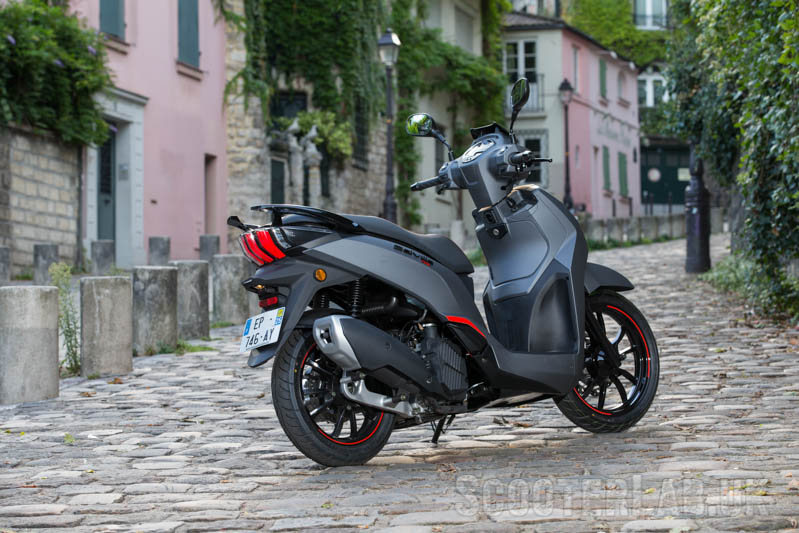
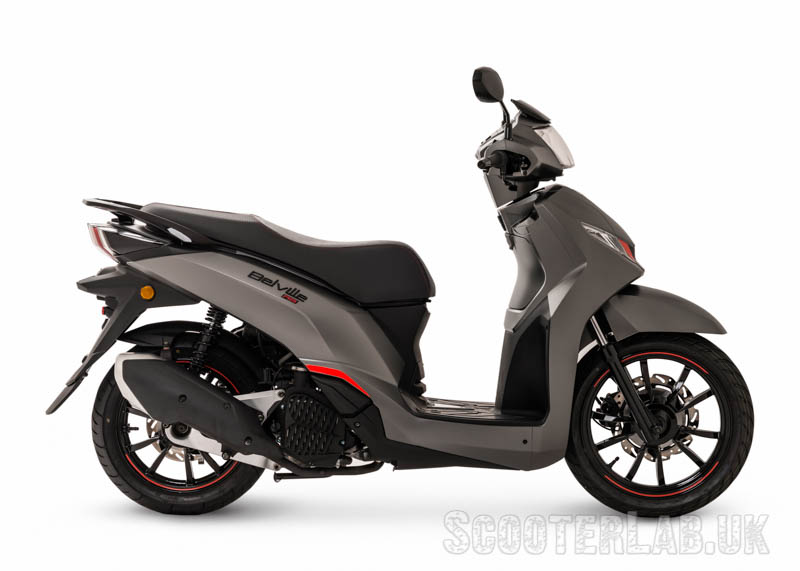
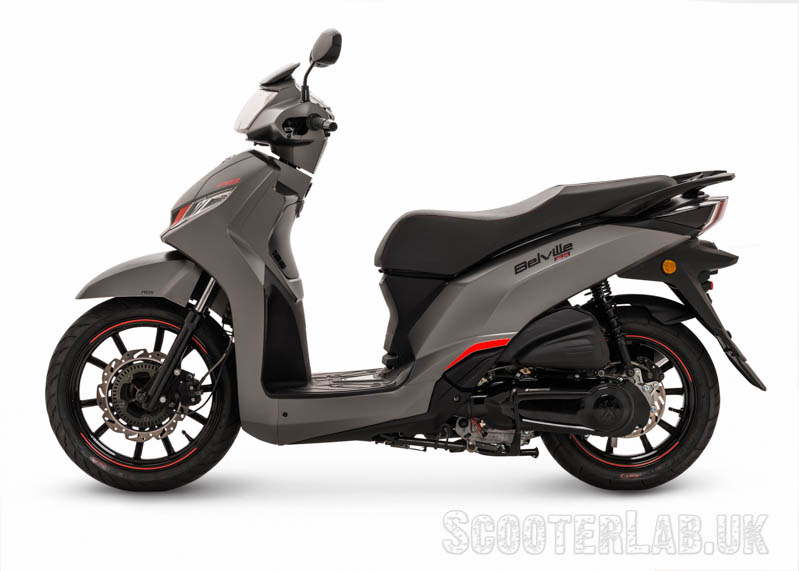
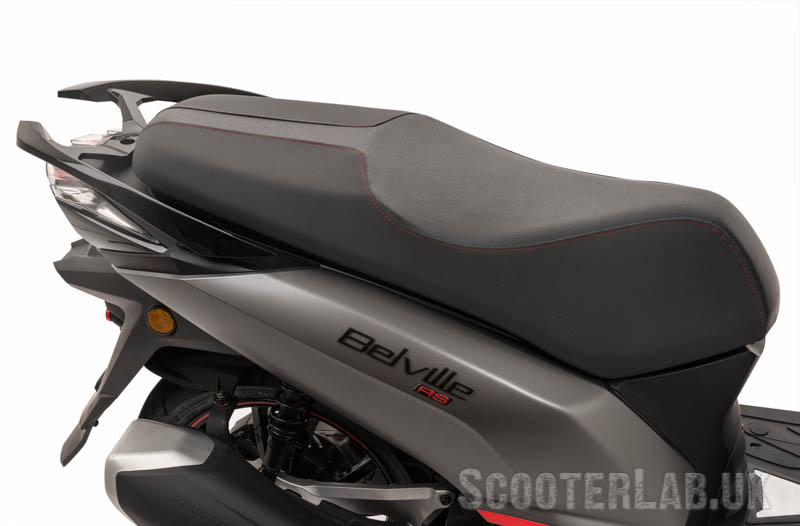
 Belville RS is the matt grey sporty version
Pizza anyone?
I must admit to being one of the bemused. I didn’t understand the fascination of the high-wheeled scooter at all. The Aprilia Scarabeo sold like hot cakes but left me cold. I also got in trouble for joking about the Piaggio (I’m) Free.
In the UK, high-wheeled scooters (14” to 16”) have always been associated with Pizza deliveries; which limits their perceived cool. The wheel layout restricts what designers can do with the styling and engineers can do in terms of storage.
None of these have the class or style of classic metal scooters, so what is the appeal?
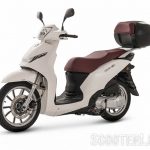
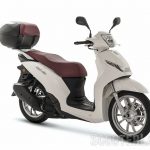
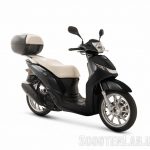
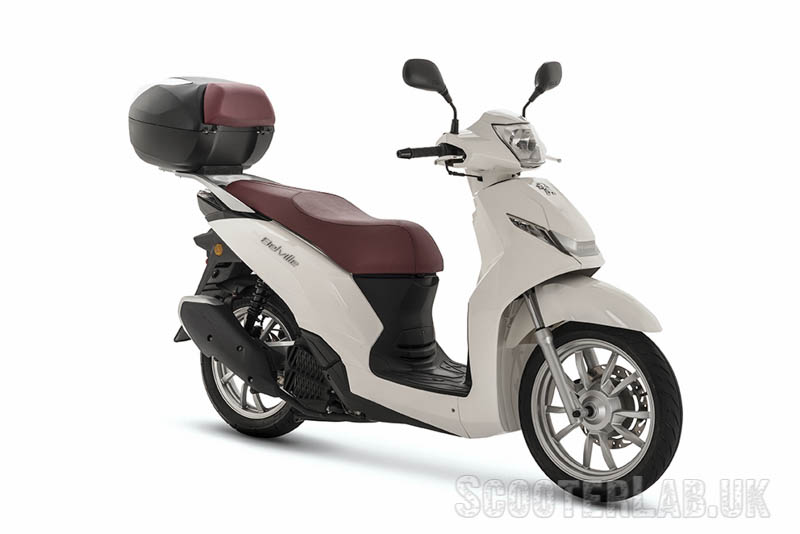
 Belville Allure models come with a top box as standard
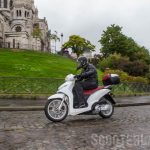
Esmeralda, the Belville!
The true reason why anyone might want a high-wheeled scooter became apparent only in swapping from the Belville to the smaller wheeled Peugeot Speedfight on the very same streets and noticing the massive improvement in ride smoothness as a result of bigger tyres and softer suspension.
It all makes sense now. Delivery companies use high wheeled scooters so the pizza doesn’t get smashed around in the box, but the rider also gets the same benefit. Less bumping around results in better control and a less tiring ride.
Belville is Peugeot’s competitor for the highly-popular European mid-price high-wheel sector. This is presently ruled by the Honda SH with almost 70% of the market, followed by Piaggio’s rather good Medley (which we reviewed at the launch here and against the Honda PCX here) and the Yamaha Xenter.
It seems that the Brits have been slow to cotton-on to the advantages of the big-wheeled scooters, but from the figures we’ve seen, things are definitely changing. High-wheels are hot property.
VIDEO | Christelle explains the advantages of the Belville 125
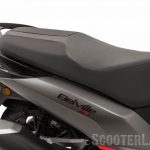
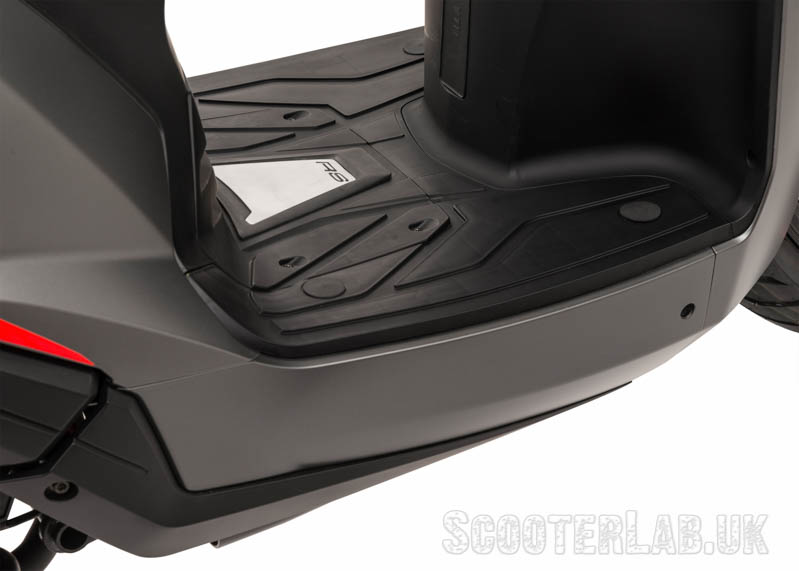
 Bay for a full-face helmet
 USB charge point
Why choose the Belville?
Well we have a little video from Cristal – leader of the project for Peugeot – to explain her opinion above, but for me the headline advantage is VFM; value for money.
What really stands out is the level of equipment that you get as standard for quite a reasonable outlay.
Having ridden only a few miles around a wet and busy Paris I can’t really comment on the top speed of the Belville 125 but I can confirm that it is nippy enough for any city commute and far more comfortable over cobbles than any smaller-wheeled scooter.
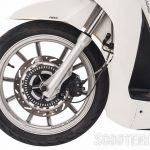
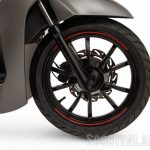
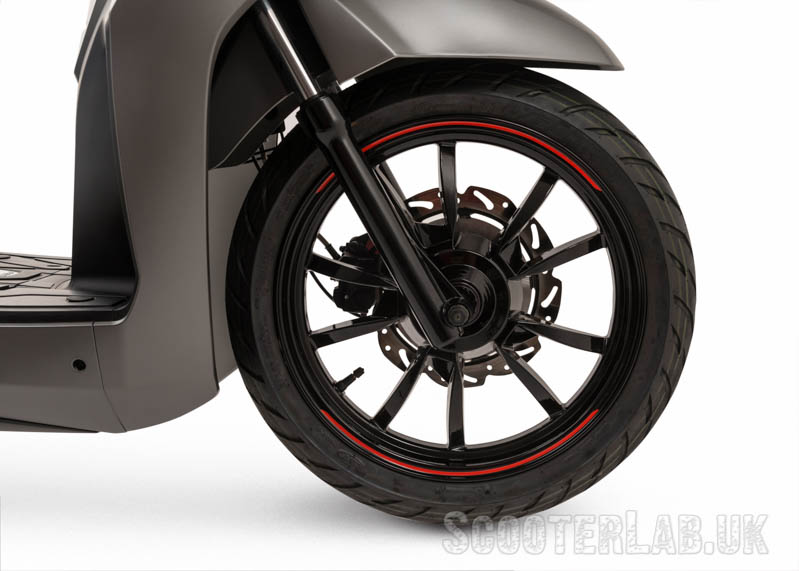
Typically, for a high-wheeled scooter, the underseat storage isn’t massive, but it will take most full-face helmets, however on the ‘Allure’ version you get a very good quality top box (made by Spanish specialists Shad) which clips straight to the main rack and uses the same key as the ignition lock. The sporty RS version does not come with the top box but makes up for that in a wave-form front disc and a tiny windscreen on the headset.
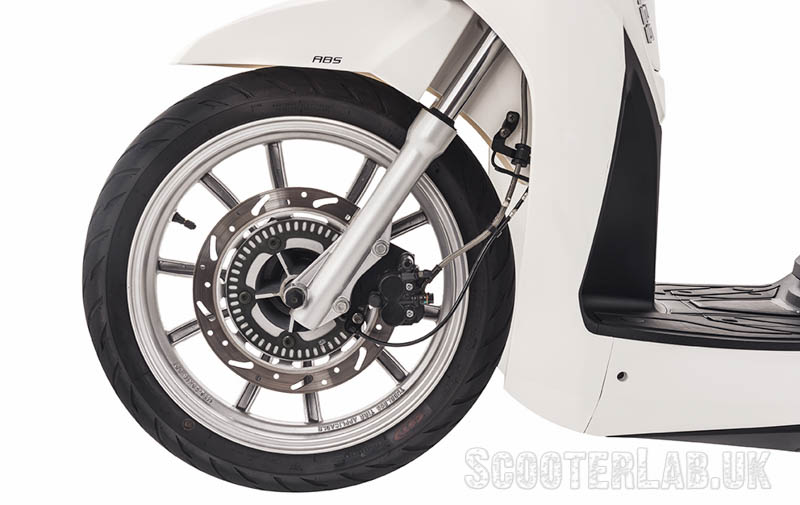
The Belville also comes with an anti-lock braking system (ABS) as standard, when many competing 125s only have a cheaper Combined Braking System (CBS).
Either way, the standard spec is quite good for a vehicle with a target retail price of under £3,000 when it arrives in the first quarter of 2018 (earlier for Italy, France and Spain).
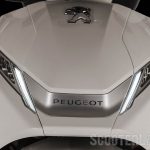
 ‘Signature’ LED daytime lighting
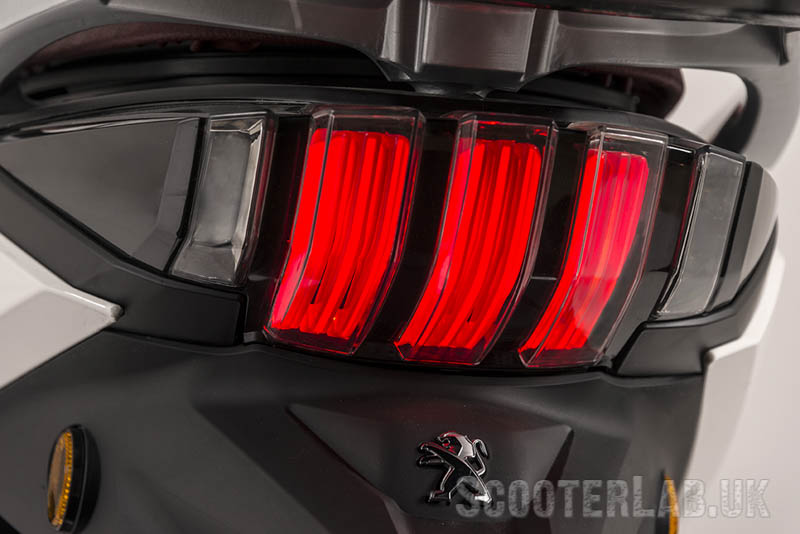 LED rear lights
Smartmotion Engine
Rather than going to the expense of a new 4-valve engine, Peugeot have squeezed out much more performance and economy from a 2-valve layout. Like Honda and Piaggio, they’ve gone for the quiet convenience of water-cooling, with an engine-mounted radiator and fan. This allows them to liquid-cool any scooter without additional, plumbing or compromises to the styling.
Power is up to 11hp, but far more important than that is the massively increased torque which is achieved by shifting the engine’s operating rpm far lower in the rpm range than before. Lowering the engine rpm so that peak torque comes at only 6,500rpm is also an advantage in fuel economy. Peugeot claim that you can cover 100km (62miles) on only 2.5 litres of fuel.
In tests, Peugeot claim that the Belville Smartmotion was comparable to the Honda SH125 on performance and just a little behind the Piaggio Medley. The claimed top speed is 95kmh (59mph) and acceleration is decent to boot.
Overall my first impressions of the Smartmotion engine were positive. It’s responsive, very quiet, economical and with a service interval of 5,000km and a belt change at 10,000km ownership shouldn’t be too hard on the pocket.
The Smartmotion engine is built for Peugeot by SYM, but it features some novel technologies. Synerject AGC is a system which disconnects the stator from the battery during acceleration and deceleration, so it only re-charges during cruising. This allows a few more Watts of engine power to reach the rear wheel rather than being used to generate surplus electricity in the charging system. The net result of AGC is improved acceleration and a claimed 5% fuel saving.
Styling
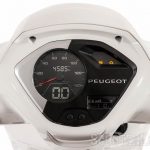
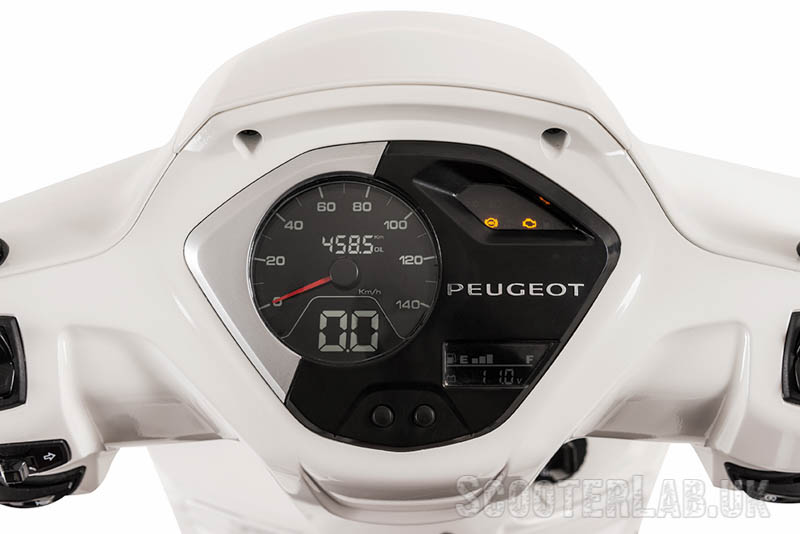
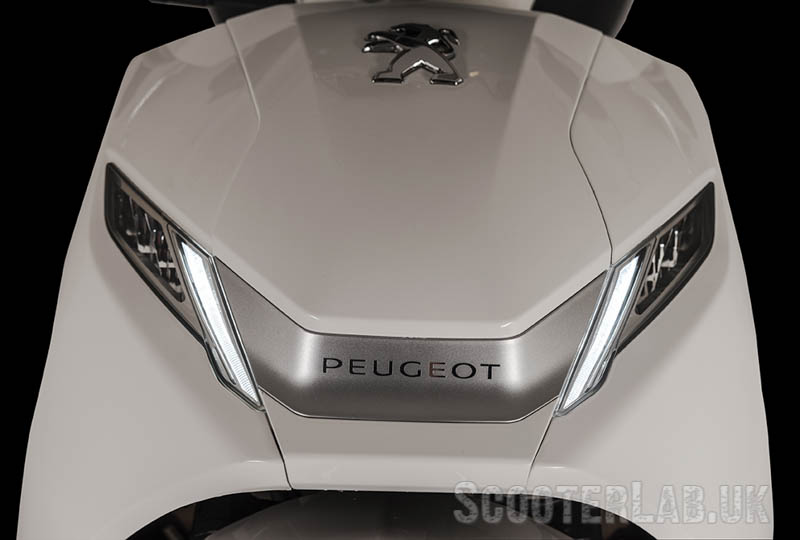
Peugeot have gone to great pains to give the generic high-wheeler platform a bit of French flair. This amounts largely to ‘signature’ lighting, with the vertical 3-stripe ‘claw’ motif used for the LED rear lamp. There’s also a clever digital/analogue LCD dashboard that can be swapped so that rpm displays on the dial with digital speed display in the centre, or vice versa.
I found the grey and red RS version far more aesthetically agreeable, but I accept that the Allure version with supplied top-box is far more practical.
Hang-ups
When looking for something to criticise, the only obvious flaw is that the ABS system is restricted to operation on the front wheel only. As we experienced on the wet cobbles, the rear wheel will still lock up on you if you grab a handful of left brake lever.
In my opinion, it makes far more sense, and shouldn’t cost much more, to provide full ABS on both wheels rather than restricting this advantage to only the front tyre; particularly if you are promoting the safety of ABS as a reason to buy. I wasn’t the only person to notice this issue.
VIDEO | First impressions of the Peugeot Belville 125
Overall
On balance, and with limited test time, I left Paris very impressed with the Belville. Of the trio of Peugeot 125s we tried (also Speedfight 125 and Citystar 125) it would probably be the most comfortable to commute on.
I still prefer the styling of the Speedfight, but with identical engines this smaller, sportier sporty option doesn’t really have any practical performance advantage.
On the other hand the Citystar would have the best storage, if it weren’t for the included top-box on the Belville Allure; which can effectively store 3 helmets in total.
If Peugeot’s UK importers can keep it under the £3,000 target price when it arrives in spring 2018 then we reckon that the Belville might be something of a bargain.
Sticky
Photos: Peugeot
More information: Peugeot UK
Belville at a glance:
- Belville Allure colour options: Onyx Grey, Jet Black, Antarctica White (includes top box)
- Belville RS Onyx Matt Grey (includes screen)
- Also available in Europe as an air-cooled 12hp 200 version


Belville RS

Belville Allure
Peugeot Belville Specifications
|
Engine |
|
|
Cylinder capacity |
125cc |
|
Bore x Stroke |
52.4 mm x 57.8 mm |
|
Engine type |
2-valve four-stroke injection |
|
Cooling |
Liquid |
|
Fuel delivery |
Electronic injection |
|
Max power |
8.1 kW (11hp) at 7400 revs/minute |
|
Max torque |
10.4 Nm at 6500 revs/minute |
|
Dimensions |
|
|
L x W x H (mm) |
1995 x 725 x 1195 |
|
Wheelbase (mm) |
1350 |
|
Saddle height (mm) |
790 |
|
Net weight (kg) |
127 |
|
Fuel tank (Ltrs) |
7.5 |
|
Suspension |
Front: telescopic hydraulic fork Ø 30 mm Rear: Twin hydraulic shock-absorbers – 75 mm travel, adjustable to three positions |
|
Tyres |
Front: 110/70 – 16’’ Rear: 110/80 – 14’’ |
|
Disc brakes |
Front: Ø 260 Rear: Ø 220 |
Optional extras:
|
SRA-certified anti-theft J-lock |
|
SRA-certified anti-theft J-lock with chain |
|
Passenger backrest on top case |
|
Handlebar muffs |
|
Riding cape |
|
Windshield |
What’s new in the SLUK Shop?
-

SLUK Clip bridge fitting kit for Lambretta S1 S2 & S3
£13.99
-

AVAILABLE NOW!! SCOOTERBOYS – THE LOST TRIBE
Rated 5.00 out of 5 £16.95
-

Vespa GTS/GTV SLUK Guard Original
Rated 4.75 out of 5 £33.00 – £35.00
-

Vespa GTS/GTV SLUK Guard Ultra
£33.00 – £35.00
-

SLUK Support ‘Sprint’ | Lambretta S3/ Scomadi
Rated 5.00 out of 5 £37.00
-

Scomadi TL SLUK Sports screen
Rated 5.00 out of 5 £75.00 – £80.00
-

NEW Improved Coast to Coast Lambretta screen – GP/DL type
£75.00 – £80.00
-

Vespa GTS/GTV SLUK Guard + Tail DOUBLE-PACK
Rated 5.00 out of 5 £53.00 – £58.00
-

Vespa PX/LML SLUK Sports screen
Rated 5.00 out of 5 £62.00 – £66.00
-

ScooterNova – issue 2 | MAGAZINE
£5.00
After a Peugeot Belville tour of the wet cobbled streets of Paris, Sticky finally concedes that there may be something in this high-wheeled scooter thing after all…

Pizza anyone?
I must admit to being one of the bemused. I didn’t understand the fascination of the high-wheeled scooter at all. The Aprilia Scarabeo sold like hot cakes but left me cold. I also got in trouble for joking about the Piaggio (I’m) Free.
In the UK, high-wheeled scooters (14” to 16”) have always been associated with Pizza deliveries; which limits their perceived cool. The wheel layout restricts what designers can do with the styling and engineers can do in terms of storage.
None of these have the class or style of classic metal scooters, so what is the appeal?

Esmeralda, the Belville!
The true reason why anyone might want a high-wheeled scooter became apparent only in swapping from the Belville to the smaller wheeled Peugeot Speedfight on the very same streets and noticing the massive improvement in ride smoothness as a result of bigger tyres and softer suspension.
It all makes sense now. Delivery companies use high wheeled scooters so the pizza doesn’t get smashed around in the box, but the rider also gets the same benefit. Less bumping around results in better control and a less tiring ride.
Belville is Peugeot’s competitor for the highly-popular European mid-price high-wheel sector. This is presently ruled by the Honda SH with almost 70% of the market, followed by Piaggio’s rather good Medley (which we reviewed at the launch here and against the Honda PCX here) and the Yamaha Xenter.
It seems that the Brits have been slow to cotton-on to the advantages of the big-wheeled scooters, but from the figures we’ve seen, things are definitely changing. High-wheels are hot property.
VIDEO | Christelle explains the advantages of the Belville 125


Why choose the Belville?
Well we have a little video from Cristal – leader of the project for Peugeot – to explain her opinion above, but for me the headline advantage is VFM; value for money.
What really stands out is the level of equipment that you get as standard for quite a reasonable outlay.
Having ridden only a few miles around a wet and busy Paris I can’t really comment on the top speed of the Belville 125 but I can confirm that it is nippy enough for any city commute and far more comfortable over cobbles than any smaller-wheeled scooter.
Typically, for a high-wheeled scooter, the underseat storage isn’t massive, but it will take most full-face helmets, however on the ‘Allure’ version you get a very good quality top box (made by Spanish specialists Shad) which clips straight to the main rack and uses the same key as the ignition lock. The sporty RS version does not come with the top box but makes up for that in a wave-form front disc and a tiny windscreen on the headset.
The Belville also comes with an anti-lock braking system (ABS) as standard, when many competing 125s only have a cheaper Combined Braking System (CBS).
Either way, the standard spec is quite good for a vehicle with a target retail price of under £3,000 when it arrives in the first quarter of 2018 (earlier for Italy, France and Spain).


Smartmotion Engine
Rather than going to the expense of a new 4-valve engine, Peugeot have squeezed out much more performance and economy from a 2-valve layout. Like Honda and Piaggio, they’ve gone for the quiet convenience of water-cooling, with an engine-mounted radiator and fan. This allows them to liquid-cool any scooter without additional, plumbing or compromises to the styling.
Power is up to 11hp, but far more important than that is the massively increased torque which is achieved by shifting the engine’s operating rpm far lower in the rpm range than before. Lowering the engine rpm so that peak torque comes at only 6,500rpm is also an advantage in fuel economy. Peugeot claim that you can cover 100km (62miles) on only 2.5 litres of fuel.
In tests, Peugeot claim that the Belville Smartmotion was comparable to the Honda SH125 on performance and just a little behind the Piaggio Medley. The claimed top speed is 95kmh (59mph) and acceleration is decent to boot.
Overall my first impressions of the Smartmotion engine were positive. It’s responsive, very quiet, economical and with a service interval of 5,000km and a belt change at 10,000km ownership shouldn’t be too hard on the pocket.
The Smartmotion engine is built for Peugeot by SYM, but it features some novel technologies. Synerject AGC is a system which disconnects the stator from the battery during acceleration and deceleration, so it only re-charges during cruising. This allows a few more Watts of engine power to reach the rear wheel rather than being used to generate surplus electricity in the charging system. The net result of AGC is improved acceleration and a claimed 5% fuel saving.
Styling
Peugeot have gone to great pains to give the generic high-wheeler platform a bit of French flair. This amounts largely to ‘signature’ lighting, with the vertical 3-stripe ‘claw’ motif used for the LED rear lamp. There’s also a clever digital/analogue LCD dashboard that can be swapped so that rpm displays on the dial with digital speed display in the centre, or vice versa.
I found the grey and red RS version far more aesthetically agreeable, but I accept that the Allure version with supplied top-box is far more practical.
Hang-ups
When looking for something to criticise, the only obvious flaw is that the ABS system is restricted to operation on the front wheel only. As we experienced on the wet cobbles, the rear wheel will still lock up on you if you grab a handful of left brake lever.
In my opinion, it makes far more sense, and shouldn’t cost much more, to provide full ABS on both wheels rather than restricting this advantage to only the front tyre; particularly if you are promoting the safety of ABS as a reason to buy. I wasn’t the only person to notice this issue.
VIDEO | First impressions of the Peugeot Belville 125
Overall
On balance, and with limited test time, I left Paris very impressed with the Belville. Of the trio of Peugeot 125s we tried (also Speedfight 125 and Citystar 125) it would probably be the most comfortable to commute on.
I still prefer the styling of the Speedfight, but with identical engines this smaller, sportier sporty option doesn’t really have any practical performance advantage.
On the other hand the Citystar would have the best storage, if it weren’t for the included top-box on the Belville Allure; which can effectively store 3 helmets in total.
If Peugeot’s UK importers can keep it under the £3,000 target price when it arrives in spring 2018 then we reckon that the Belville might be something of a bargain.
Sticky
Photos: Peugeot
More information: Peugeot UK
Belville at a glance:
- Belville Allure colour options: Onyx Grey, Jet Black, Antarctica White (includes top box)
- Belville RS Onyx Matt Grey (includes screen)
- Also available in Europe as an air-cooled 12hp 200 version


Belville RS

Belville Allure
Peugeot Belville Specifications
Engine | |
Cylinder capacity | 125cc |
Bore x Stroke | 52.4 mm x 57.8 mm |
Engine type | 2-valve four-stroke injection |
Cooling | Liquid |
Fuel delivery | Electronic injection |
Max power | 8.1 kW (11hp) at 7400 revs/minute |
Max torque | 10.4 Nm at 6500 revs/minute |
Dimensions | |
L x W x H (mm) | 1995 x 725 x 1195 |
Wheelbase (mm) | 1350 |
Saddle height (mm) | 790 |
Net weight (kg) | 127 |
Fuel tank (Ltrs) | 7.5 |
Suspension | Front: telescopic hydraulic fork Ø 30 mm Rear: Twin hydraulic shock-absorbers – 75 mm travel, adjustable to three positions |
Tyres | Front: 110/70 – 16’’ Rear: 110/80 – 14’’ |
Disc brakes | Front: Ø 260 Rear: Ø 220 |
Optional extras:
SRA-certified anti-theft J-lock |
SRA-certified anti-theft J-lock with chain |
Passenger backrest on top case |
Handlebar muffs |
Riding cape |
Windshield |

What’s new in the SLUK Shop?






You were laughing, when I arrived at the Lyon Rally with a Scrababaleo… They are still a better option in used condition, than their grandchildren…. Build quality and parts which will not be reached anymore, with chinaparts domination. Looking for my next winterscarabeo right now….