Those of us who love the smell of 2-stroke in the morning will be pleased to hear that the sky has not fallen in with the introduction of Euro4 emissions regulations.
KTM have recently announced road-legal 2018 versions of their EXC enduro 2-strokes in both 250cc and 300cc forms, due out later this year using a technology they call TPI.
The question is; if they can do it on a motorcycle, why can’t it be fitted to a scooter? Piaggio, are you listening?

Why continue with 2-stroke?
For KTM it makes a lot of sense:
- 2-stroke can’t be beaten for power-to-weight or power-to-capacity
- Many off-roaders are disheartened at the high cost of repairing 4-strokes
- Competition rules that disfavoured 2-strokes are being levelled this season
- Euro-5 doesn’t arrive until 2020 which gives the TPI at least 3 years of life.
What’s TPI?
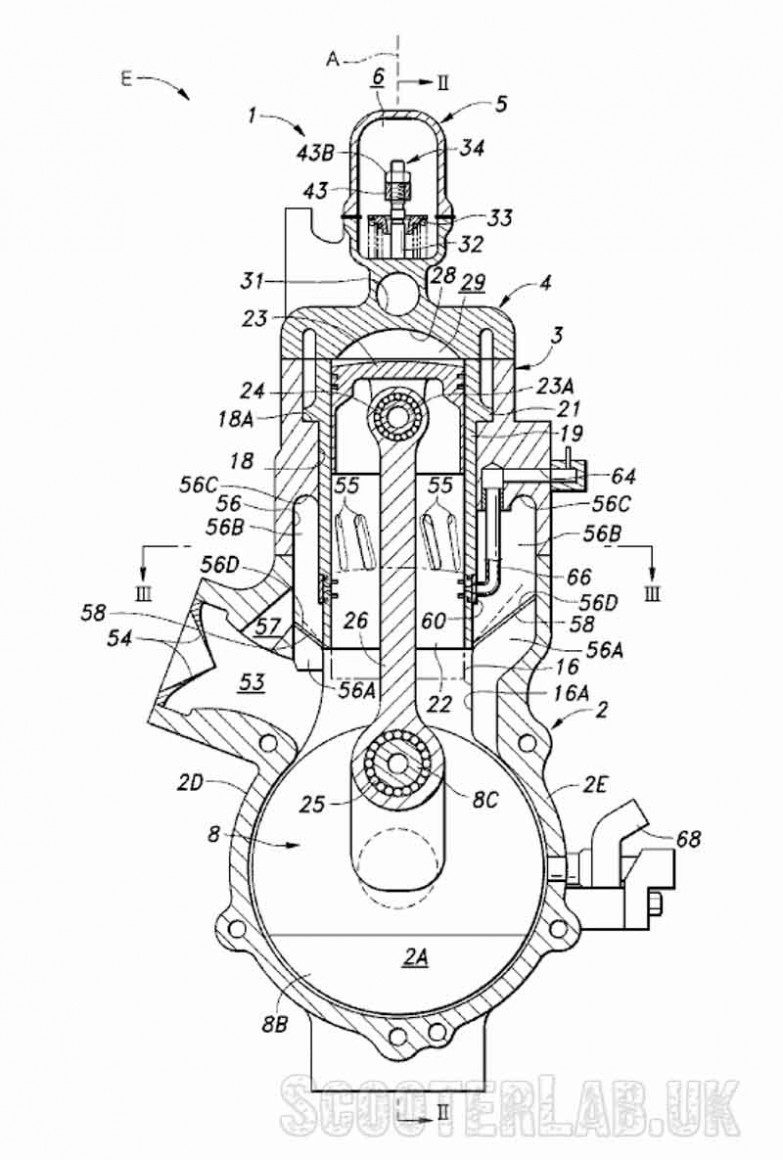
TPI stands for Transfer Port Injection. This is like an affordable half-way house between carburettors (where fuel is mixed with air before entering the engine) and full Direct Injection (where fuel is injected into the cylinder head only after the exhaust port has closed so no fresh charge is lost).
TPI places the injector in the transfer port so that fuel is only injected into the incoming air, flushing the combustion chamber in a very precise manner. The difference in how little fuel is lost is to do with the angle of the injector nozzle and the timing of the pulse. Fuel can be injected at later during the transfer port open phase so the initial scavenging is with fresh air. The result is that far less unburned fuel is lost out of the exhaust port than a carburetted engine, which in turn massively reduces emissions.
VIDEO: Athena \'Direct Injection\' system, very similar to TPI
How is the TPI engine lubricated?
Most off-roaders like to mix their own oil in the fuel tank, but the KTM system introduces an oil pump and a separate oil tank. The TPI engine still only pumps air around the crankcase, but the absence of fuel permits use of a reduced amount of 2-stroke oil. Again, there is an emissions benefit.
Is this system adaptable to scooters?
For certain it is. TPI has many advantages over Direct Injection in terms of reduced cost and complexity since the injectors used can be similar to those used in many other applications. As the Athena video above demonstrates, TPI can work even on small engines without a battery, offering improvements to both performance and emissions.
Will Piaggio choose this solution for the rumoured Vespa PX replacement, or are they fixed on 4-bangers leaving us stinkwheel lovers with only an (expansion) pipe dream?
Sticky