
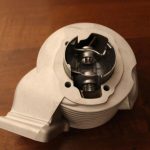
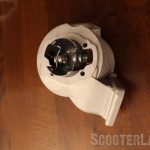
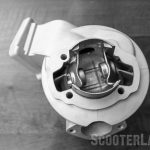
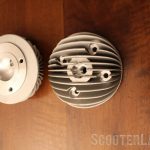
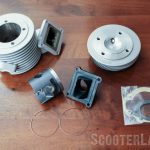

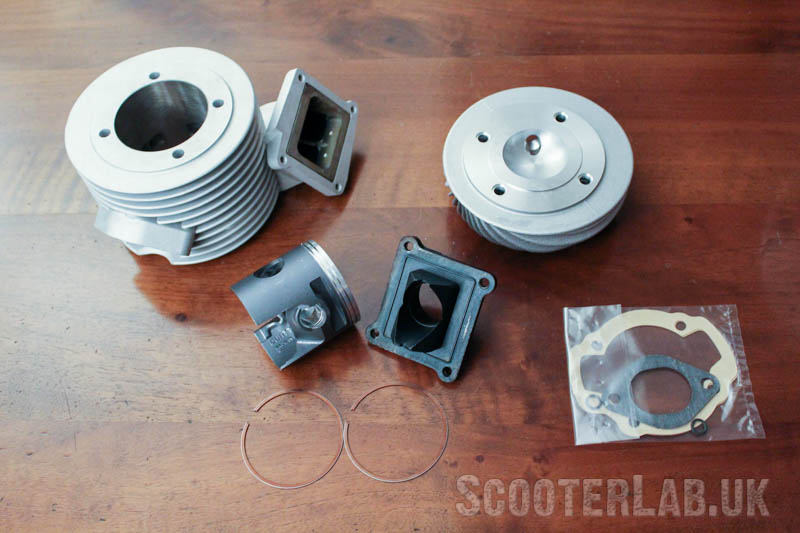
Well, this will set the cat amongst the pigeons. The latest smallblock kit for Lambretta comes from someone more famous for Vespa engines, but Max Quattrini has applied lots of creative technical solutions to make it stand out from the crowd.


History
I’ve got a lot of respect for Max Quattrini. He has a background in scooter tuning that stretches back to the 90s when Polini, Malossi and Eurocilindro were running Grand Prix level operations (even with Grand Prix riders) for a hotly-contested Italian scooter championship. He has worked in the background for many Italian tuning companies on various 2-stroke projects.
At the start of this millennium he turned his attention to Vespa and produced the M1 and M1L-R kits for the smallframe. These little aluminium 125cc kits made a sudden step-up for performance from a bolt-on kit that really kick-started the modern smallframe race business.
Quattrini kits are generally very good quality. I still have a Quattrini kit fitted to my matt black SS90 “Underdog” which has been ridden to France for a rally and raced around the Nurburgring. Myself and Andy Gillard even used a Quattrini engine (from Marco at LTH) in Underdog to win the smallframe class at the Alcarras 6-hour endurance race in Spain in 2011.
Essentially, even though Quattrini’s kits are powerful, they are also usually reliable. And there is a great deal of science behind that…

It’s all about thermal stability
Max – a baker by trade – was the first tuner to really explain to me the importance of making a cylinder that is thermally stable. In other words, a barrel whose bore remains as round as possible once the engine is up to operating temperature.
In truth, cylinders warp and distort in all manner of strange ways as they heat up unevenly. The classic manifestation of this is the “4-point seizure” on Lambretta barrels where the thin areas of cylinder wall near the stud holes expand into the bore until the piston seizes. The bigger the bore, the thinner the wall to the studs and the more likely this will be a problem.
The Lambretta barrel layout is particularly dire in this respect because the cooling air from the fan arrives on one side of the barrel, making bore distortion inevitable.
Quattrini considers all of these issues in the specific design of the barrel. His Vespa kits were developed by heating them up to operating temperature in the bread ovens and then measuring the roundness of the bore once hot.

Maxed out
Thermal stability for his Lambretta kit is particularly important because Max has literally Maxed-out the bore size. Where the popular kits for the 125-150-175 casings have crept up recently from 186 to 200cc, Max has gone for a 68mm bore giving 210cc from a 125cc engine casing with use of a standard 58mm stroke crankshaft!
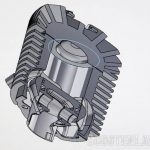
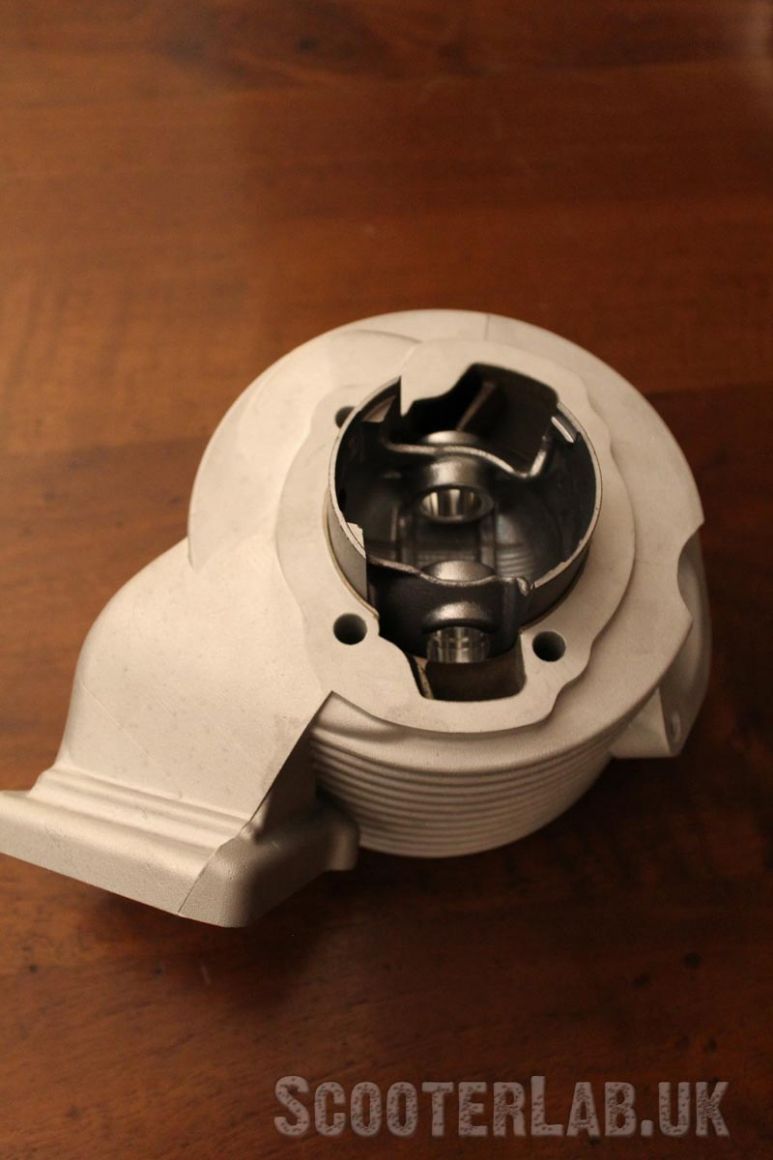
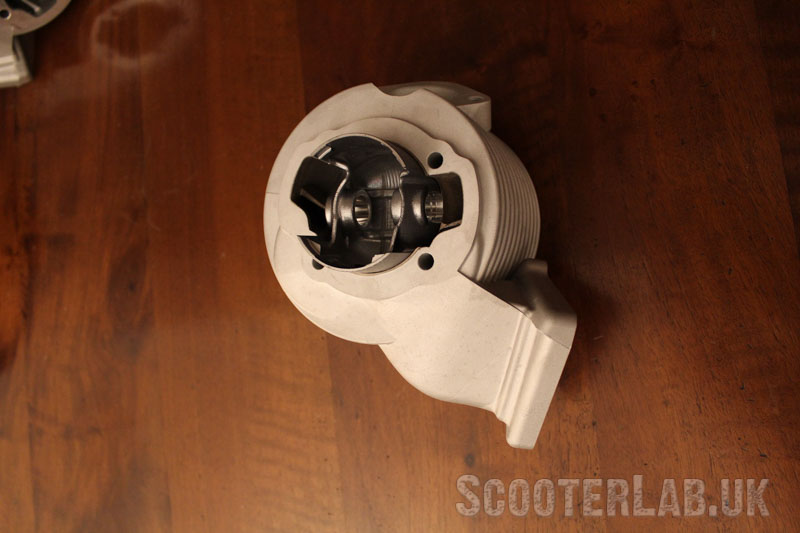
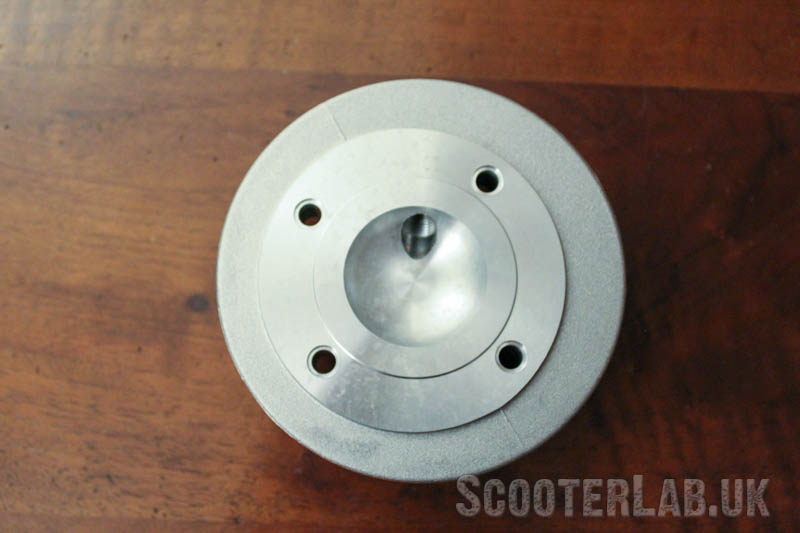
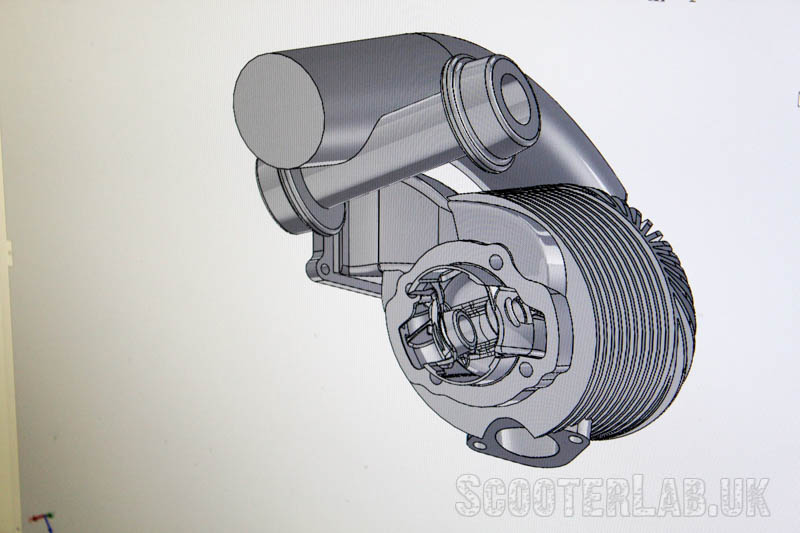
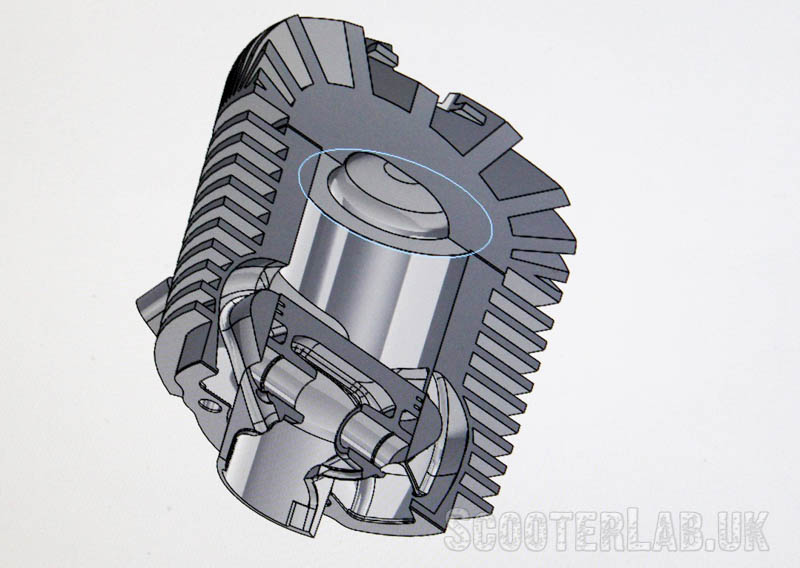
To achieve this, the cylinder has to do away almost completely with the spigot – the extended part of the barrel that normally centres inside the crankcase mouth. Instead the kit centres the barrel on the crankcase using the cylinder studs alone.
If this method of centring the barrel sounds unlikely to work, consider that it is the same method employed on Quattrini’s M232 and M244 kits for the Vespa PX200 engine, as raced in the UK by ‘Mad Dog’ McKenzie. That works fine.

Long Rod
Part of the ‘no spigot’ concept is keeping the piston higher in the cylinder using a long con-rod. The normal Lambretta con-rod is 107mm but Max specifies the use of a 116mm (TV175 length) con-rod. There are already plenty of ‘race’ crankshafts available with this length of rod fitted, including the ones AF sell for the RB20 kits.
Eccentric cooling concept
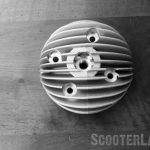
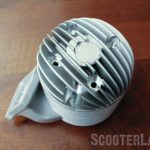
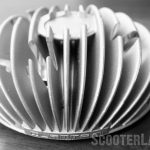
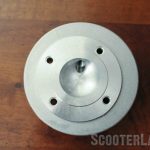
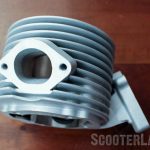
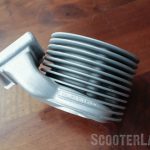
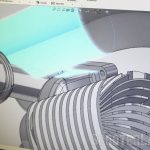
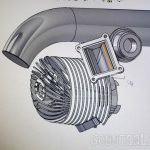
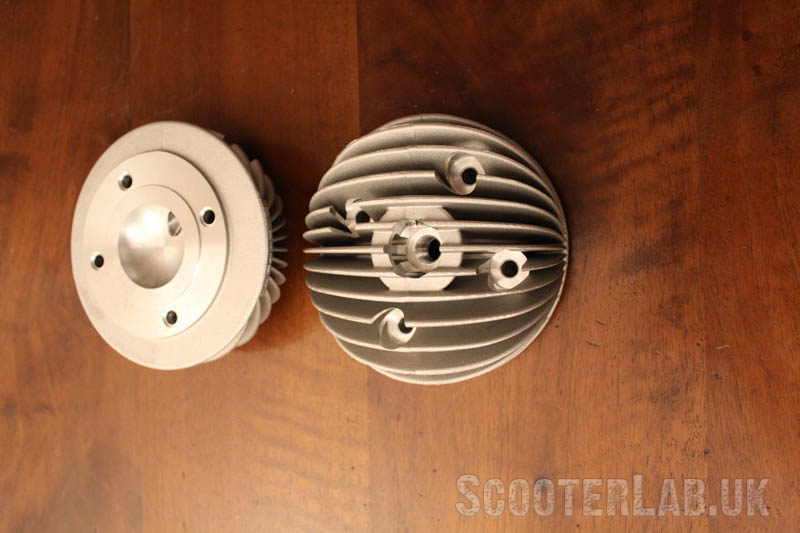
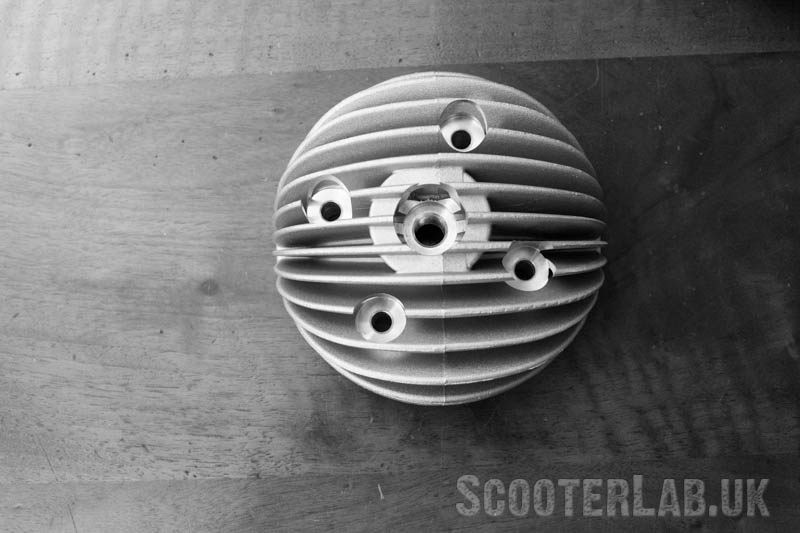
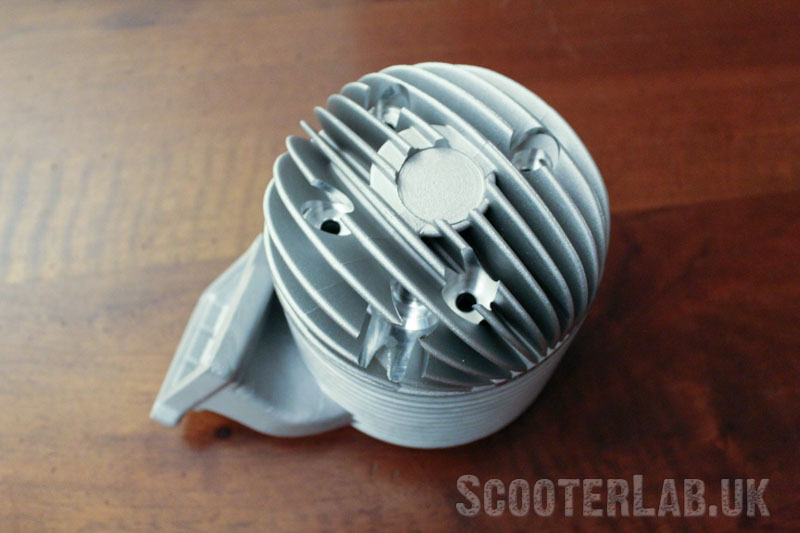
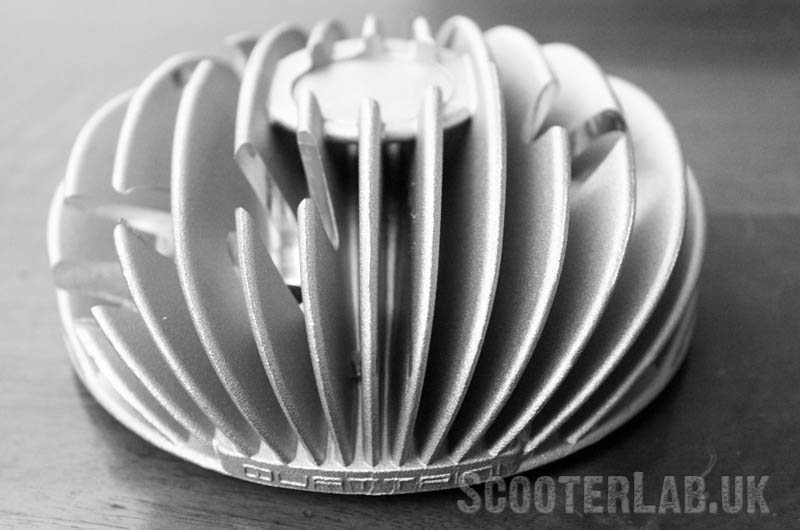
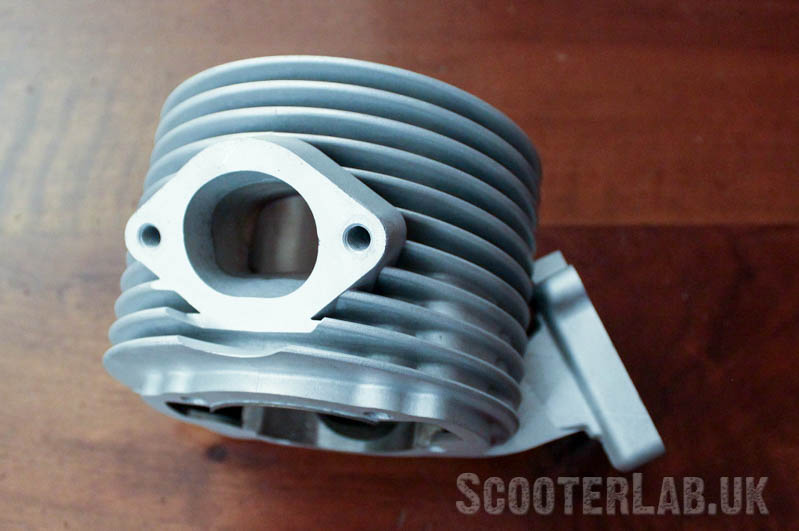
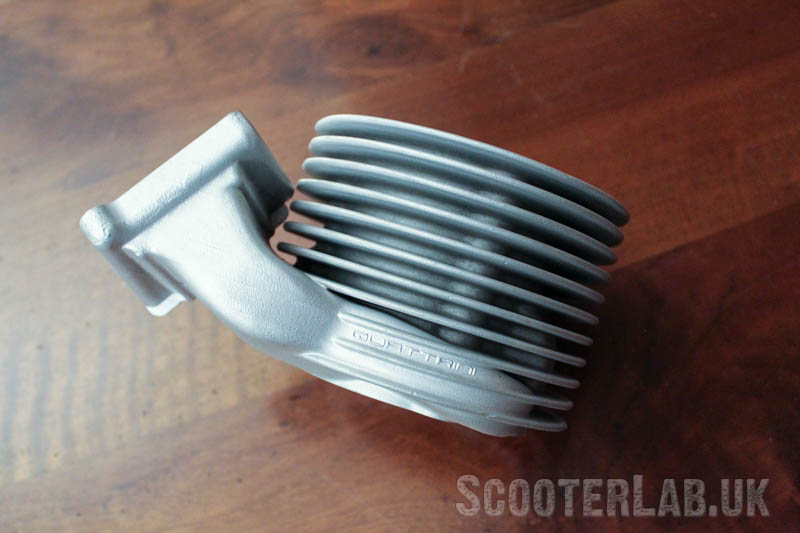
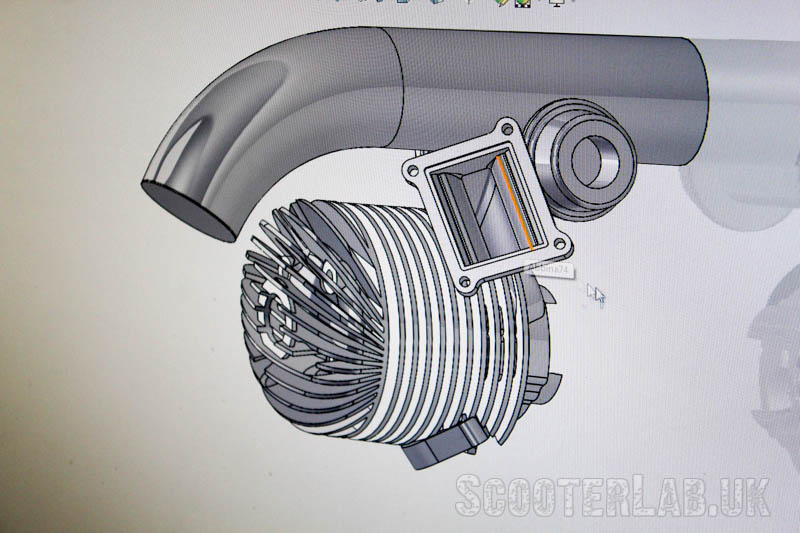
Given that the 68mm bore is now so close to the stud holes on a 150 casing, Max carefully studied both the alloy Nicasil barrel fins and the piston. His solution to evenly cool the barrel was to make the fins off centre to the bore. Those on the ‘cold’ flywheel side are shorter whereas those on the ‘hot’ kickstart side have greater area to shed more heat. The same applies to the radial-finned head; which is available in either centre-plug or side-plug formats.

GP-spec piston
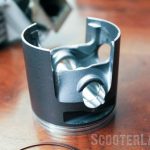
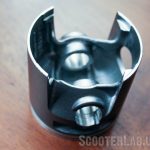
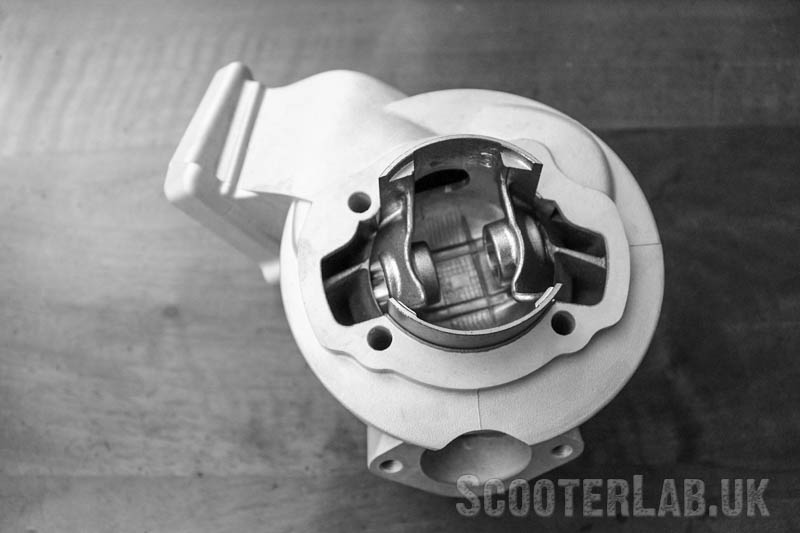
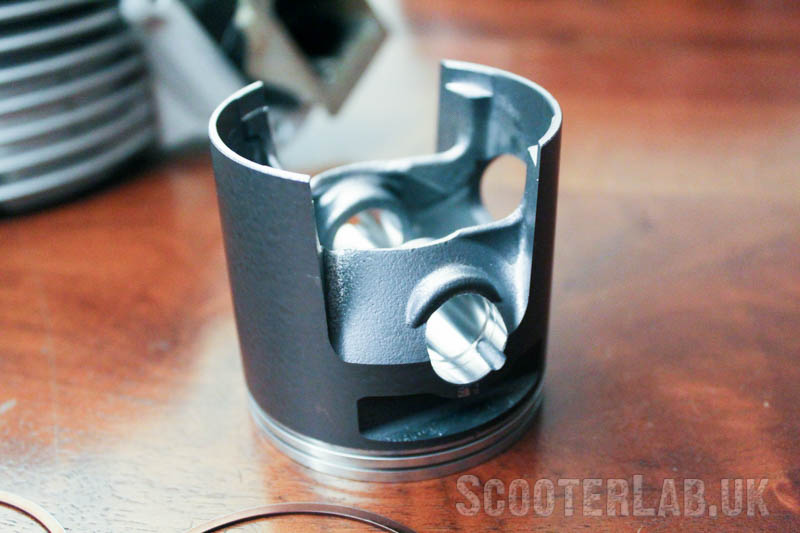
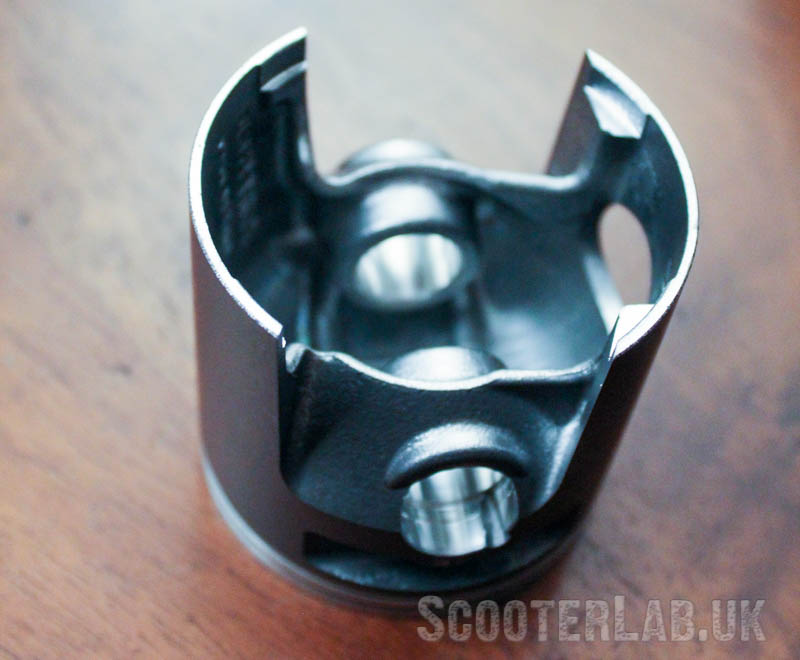
If you think that all pistons are the same then think again. The piston for this kit was designed specifically to maximise gas flow into the large transfer ports, despite the transfer cutaways in the Lambretta casing being relatively small.
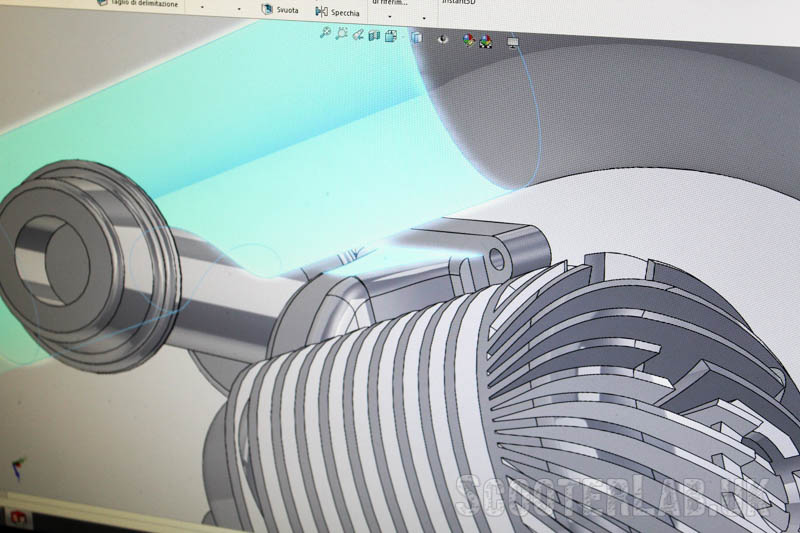
Max used Computational Fluid Dynamics (CFD) software to plan the shape of the piston so that the tapered shaped sides of the descending piston acted like a wedge, forcing gas sideways into the transfer ports.

The genius you can’t see
The piston is not only specifically designed to aid transfer flow, but it is also made on a specific Japanese piston lathe that is able not only to produce pistons that are oval in section and barrel-shaped in profile, but also subtly petal-shaped to increase clearance near the studs to reduce the chance of 4-point seizures. By machining the piston in this way you accept the cylinder bore is not actually round when the engine is running and compensate for it in the shape of the piston.
The same machine is also used to ensure that the fine machining on the skirt of the piston is actually a saw-tooth profile aimed to better distribute 2-stroke oil up the bore of the barrel.
There are other scooter kits which use his same technology in their Meteor-made pistons as well.

Port layout
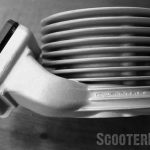
Perhaps unexpectedly, Max has identified that the market for Lambretta cylinder kits is mainly for street use, so this barrel has only one large exhaust port. The outlet is a 2-stud affair but with an angled rearwards gasket face, as per RB kits etc.
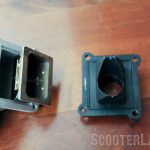
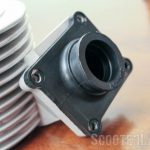
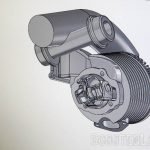
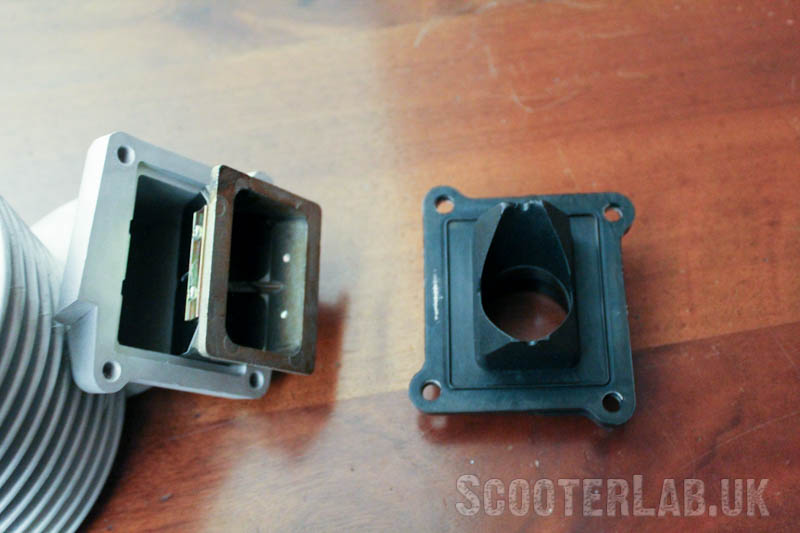
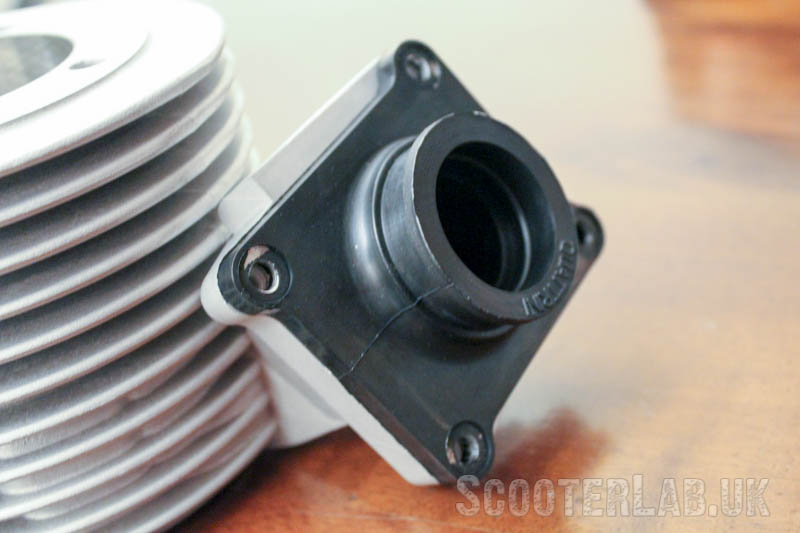
The kit is more radical on the inlet though because it features a cast-in reedblock housing entering from the flywheel side. This puts the carburettor ‘roughly’ in the original position. The inlet has feeds which wrap around the outside of the cylinder studs as ‘Boyesen port’ which feed directly into the main transfer passages. There are also two boost ports that are fed from the inlet port.

Early days
While Quattrini has already made and sold one batch of kits, these have mainly been bought by tuning freaks eager to see what can be done. One of the first problems that the tuners of the German Scooter Forum have identified is that the transfer cutaways in the barrel are actually bigger than the gasket face of an Italian engine casing! The barrel looks like it will seal on the Spanish or Indian 150 casings that have the same gasket area as the 200. Alternatively the crankcase mouth can be built up with weld or Devcon to offer more gasket area. Certainly it doesn’t look like an easy bolt-on for standard casings just yet.
However, for those interested in experimenting, Casa Performance have told us that they plan to make a dedicated version of the CasaCase with the correct stud pattern and pre-machined gasket face area to suit the Quattrini 210
The other issue to be resolved is the exhaust gasket angle which means that the vast majority of exhausts on the market won’t just bolt straight on. Max says that he tested this kit with a ‘Clubman style’ exhaust and in that configuration it produced over 20hp with a 22mm VHST carb! However, the kit won’t fully reach its potential until someone makes a dedicated expansion chamber for it. I don’t think that will take long though, given the interest of the German tuning community.
At the moment we don’t have any dyno graphs or other data for this kit.
We also asked Max if he would do a version for 200cc casings and his reply was ‘not yet’. He’s a very busy man and there are some new Vespa products in the pipeline first…


Where can I buy a Quattrini kit?
The Quattrini Lambretta 210 kit has a retail price of 699 Euros from Scooter Center and SIP Scootershop.
Text: Sticky
Images and info: Christiaan from PLC Corse
Thanks also to Philipp Montforts and the guys of the GSF

Have you seen our latest SLUK Merchandise?








hi sticky
in this article you mentioned devcon i have not heard of devcon befor.
you state
(Alternatively the crankcase mouth can be built up with weld or Devcon to offer more gasket area).
I Had a google for devcon and noticed they do a few products, which product in there List of stuff are you referring to, for building up gasket face area.
regards lee
Hi Lee, the racers used to use Devcon F Aluminium Putty for repairs in the 90s but there may be better stuff available now.
Do you know if the RB exhaust definitely fits?
No we don’t know if RB exhausts fit, we merely mean that the angle was similar Martin