

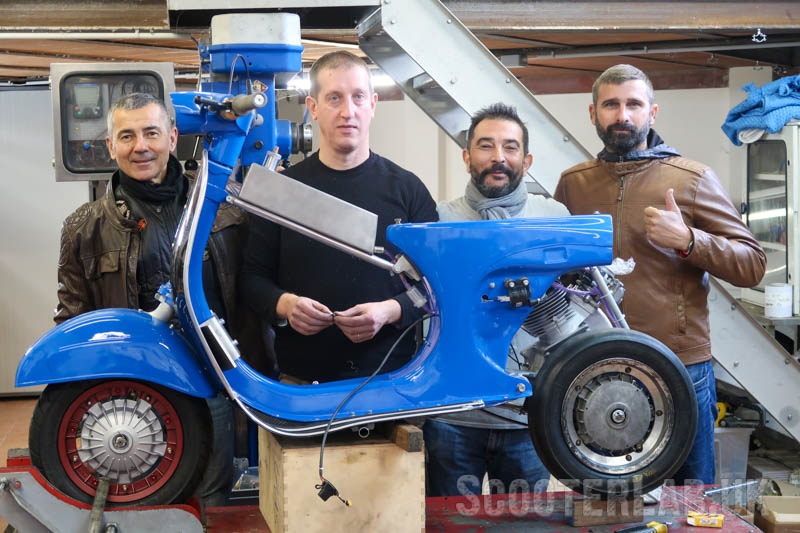
BFA rose like a phoenix from the ashes of BSG. Bear in mind that they are absolutely nothing to do with the BFG (Big Friendly Giant). Fabio Begani and Alessandro Graiani continued the work started as BSG and developed everything further. Given the massive and varied output of their brand it’s amazing that this is still a part-time enterprise for them. Sadly, they each have day jobs which get in the way of playing with quick 2-strokes. For BFA, the big passion seems to be sprinting. Their engines won the Italian Vespa sprint championships in 2019; the last time it was held. For BFA, winning the sprinting championship seems to be the main badge of honour.
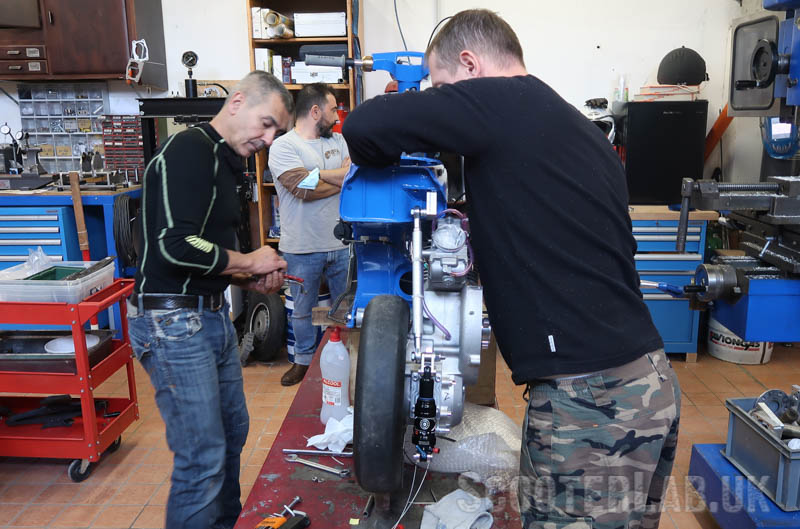
Italian Vespa Sprinting
There are 3 categories running over 1/8th of a mile (201 metres):
• 135cc air-cooled with rotary valve inlet
• 150cc air-cooled with Piaggio stud pattern
• 150cc open class
The quickest of these will cover 200 metres in around 7.25 – 7.3 seconds. The top category was won in 2019 by Paolo Sensi riding a scooter prepared by Salvatore La Greca. For the last meeting of that year BFA loaned Paolo their ‘works’ engine to beat off a massed rank of Falc riders.
Sadly the pandemic put paid to the northern Italian sprint championships for 2020, as Alessandro explains: “After COVID, races haven’t really restarted. We have to start again in the north in 2022. Maybe some racers will be lost to the sport; due to their age, or due to the cost or for any other reason. But in Sicily now, there is a big community and they are still racing. They have 30-40 people riding and they did three or four races last year.”
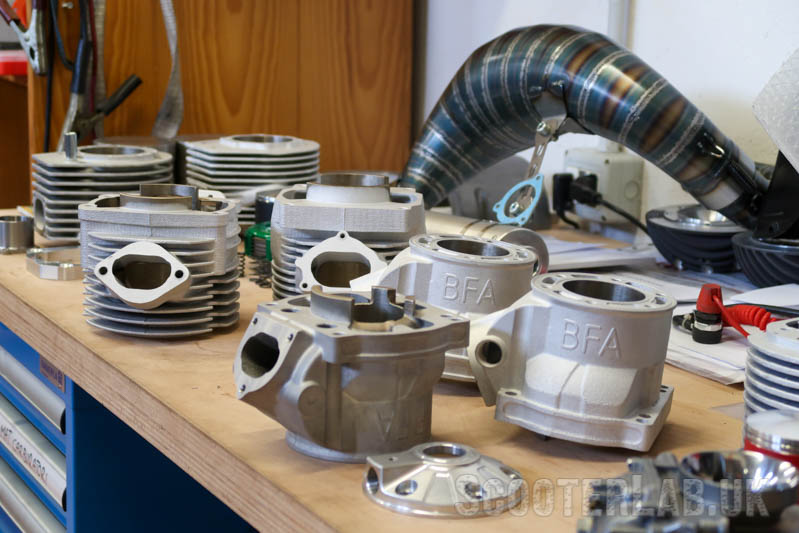
BFA’s Vespa cylinders borrow heavily from port layouts developed for Grand Prix and MX by the likes of Aprilia and TM; revisited by Fabio for the different purpose. “Some cylinders have the Aprilia port layout, some with TM port layout and some with TM-style transfer ports but with Aprilia exhaust port. We find them very similar with only half horsepower difference. One has a little more torque at low rpm and the other has a little more rpm but only a small difference. The Aprilia has more power and more rpm but it’s not so good like TM for sprinting. ” I ask if BFA have any ambitions to move into the scooter circuit racing arena, but it seems far from a top priority. “For circuit racing we started collaboration with Eugenio Ferretti of FRT Racing from Modena. He has a little team for racing and we work together; we developed a 150 air-cooled kit for him that has given us many good results in sprint, but is a product that we have yet to improve for circuit races, but some trials gave us a very good feedback.”
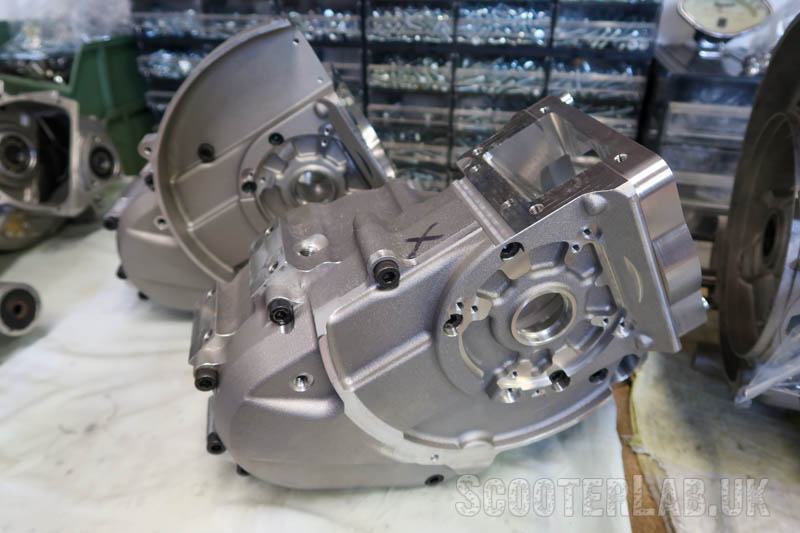
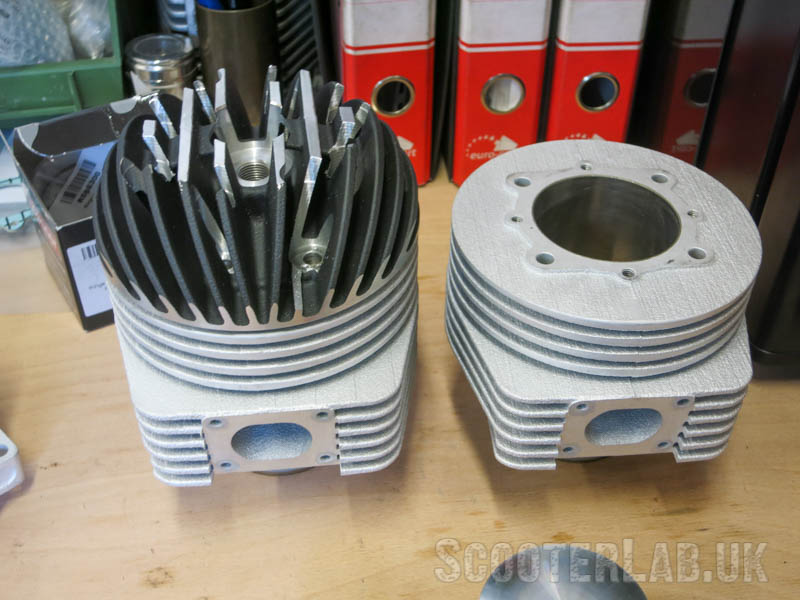
Large Frame Cylinders – PX 177
BFA’s famous large-frame engine – the 306cc – was transferred as an ongoing project to SIP Scootershop, after BFA decided to stick to the smallframes that they are more famous for. Things didn’t stay that way for long though. “After the BFA 306 PX engine project went to SIP we had many requests from customers saying ‘why don’t you make something for PX?’ So we were almost obliged to do something for large frame again. We first made a 177; that is almost unknown on the market, because we only made very few pieces. It had a high cost because our type of production is not cheap. It has a forged custom piston from Wössner and uses the same technology used in our 244 kits. It is only for real “177cc lovers.” “So we have only five or seven cylinders left. Then we will run out of stock and make a new one. There are two versions of the exhaust port. One with a bridge and also without a bridge. Maybe for the next year we will make some changes to the design with something never seen on this category.”
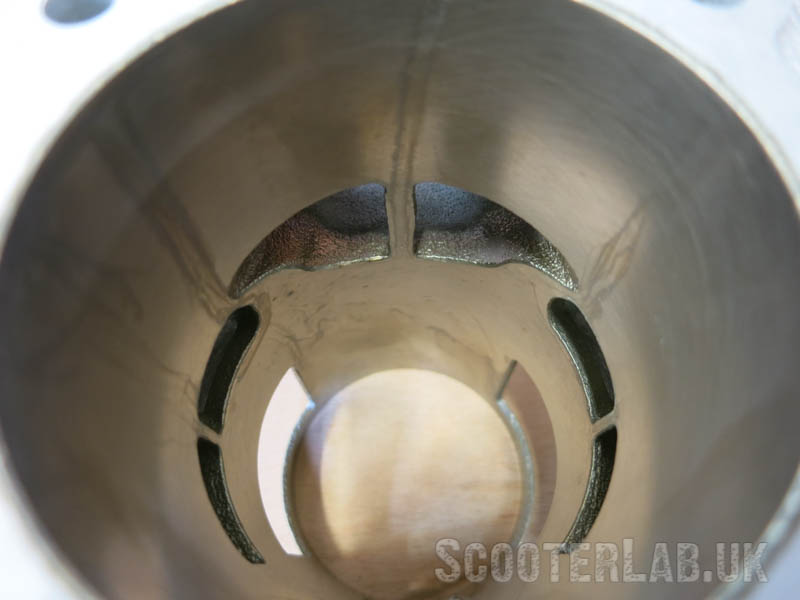
It’s interesting for BFA to dabble in the world of moderate real-world upgrades, if only in small-batch, high-cost form. Alessandro has been running a BFA 177 on Fabio’s PX for some months, complete with 24mm SI carb and box pipe and on the dyno this made 16.5hp. Despite not sounding like a lot, in the grand scheme of things with a standard airbox and exhaust, it is what a lot of older scooterists now want. Standard appearance and sound but lots more power. Large Frame Cylinders – PX 244 and 260 The next BFA solution was to produce a big-bore kit for both the PX125/150 casing and the PX200 casing that takes a 72mm piston and accepts any exhaust for the Vespa 200. This design was chosen because of the greater outlet diameter and also greater availability of exhausts that will fit.
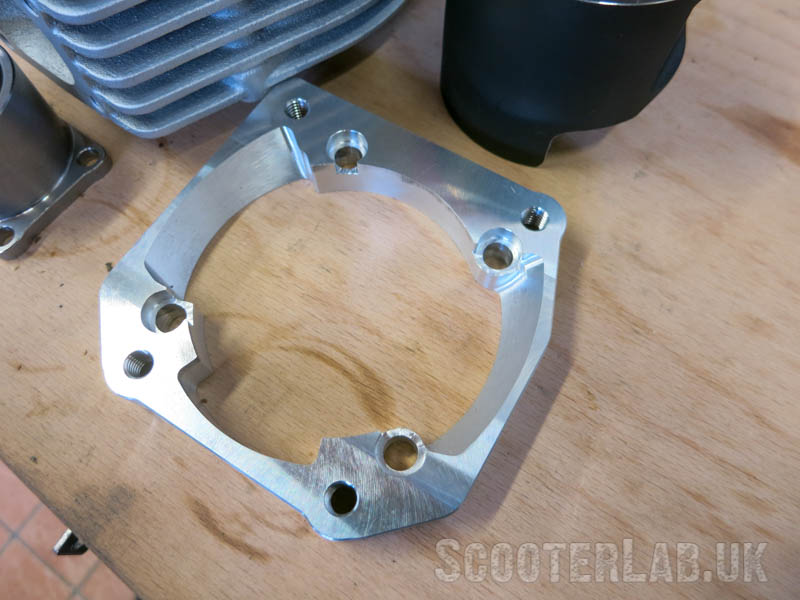
The clever thing about this kit is that the adaptor plate – which bolts to the casing with 4 short Allen bolts – permits the revision of the port layout. The cylinder and head now bolt to the adaptor using four studs but their revised position is optimised for port layout. These kits feature triple exhaust ports and offer plenty of power potential from original-style engines. Perhaps a bit too much for standard engine casings though…
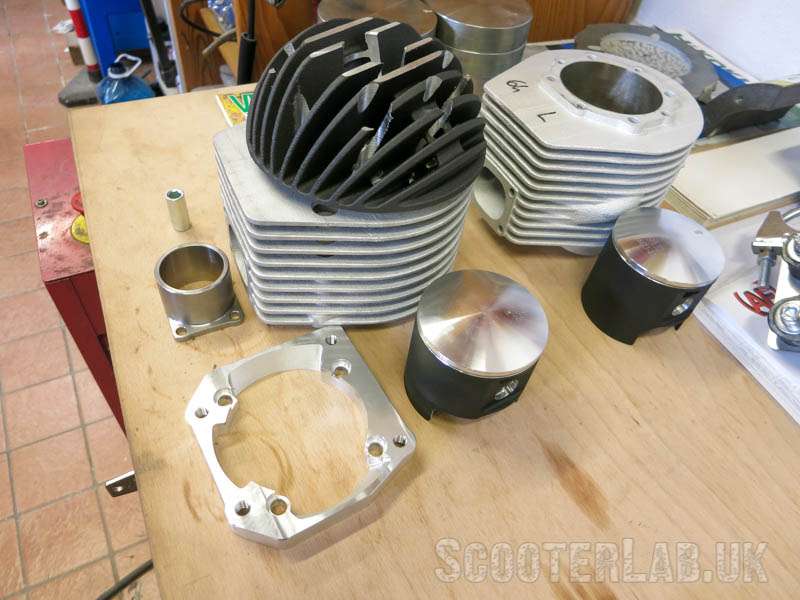
BFA 244 kits for PX125 and PX200 casing layout
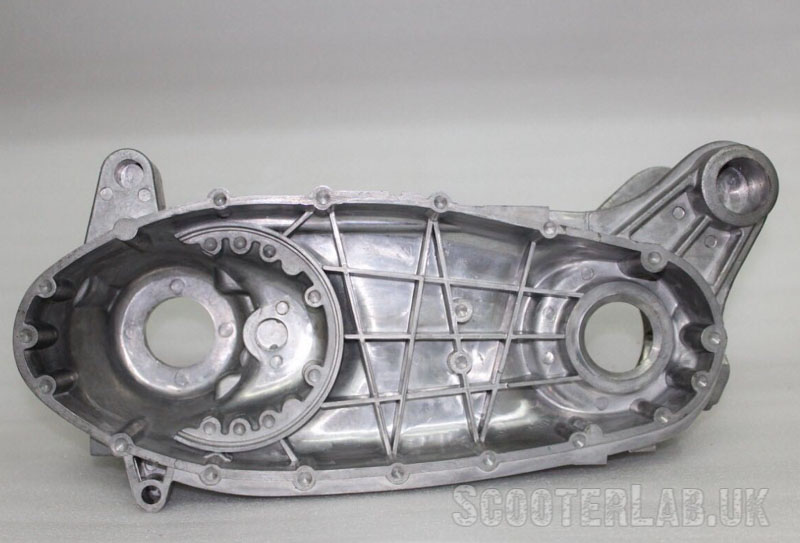
“We made some adaptor plates for the Piaggio casing but all the others are built for the Malossi casing. They are much stronger and made from better metal. The shaft holes are correctly aligned. Malossi casings are a very good product. “We also made a special replacement reed inlet for the Malossi casings for 35mm carburettor. It is not metal; it’s a special polymer that we are testing to see if it lasts.”
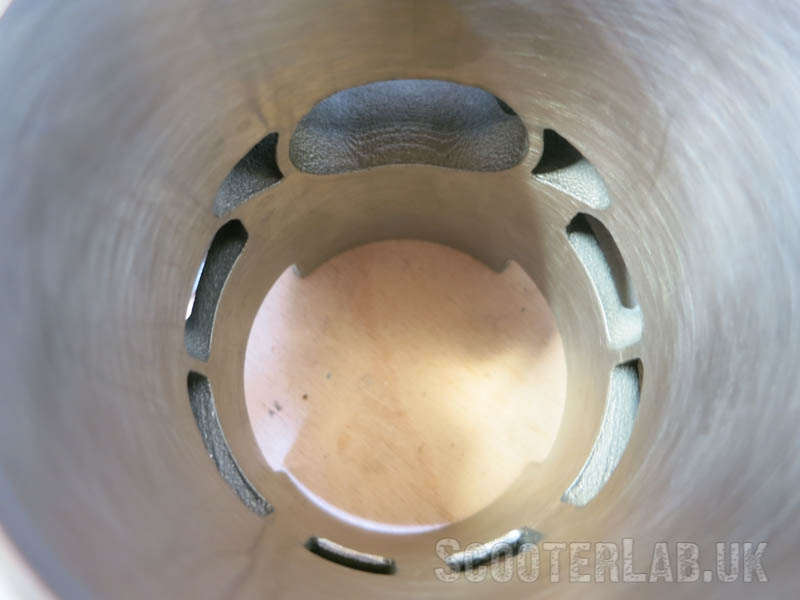
These large frame cylinders are designed to work with 60mm stroke crankshafts but there are also special versions of the kit to suit 64mm stroke cranks. “We now also sell this 260 kit, so that is what you can test in my Vespa. A 260cc using a 64mm stroke Kingwelle crank and a 128mm conrod. In Germany they like touring cylinders, very strong in the middle rpm range and not too strong in the upper. With this kit they are very happy.” “I think this is the most beautiful road cylinder kit we’ve made.”
Large Frame Clutch
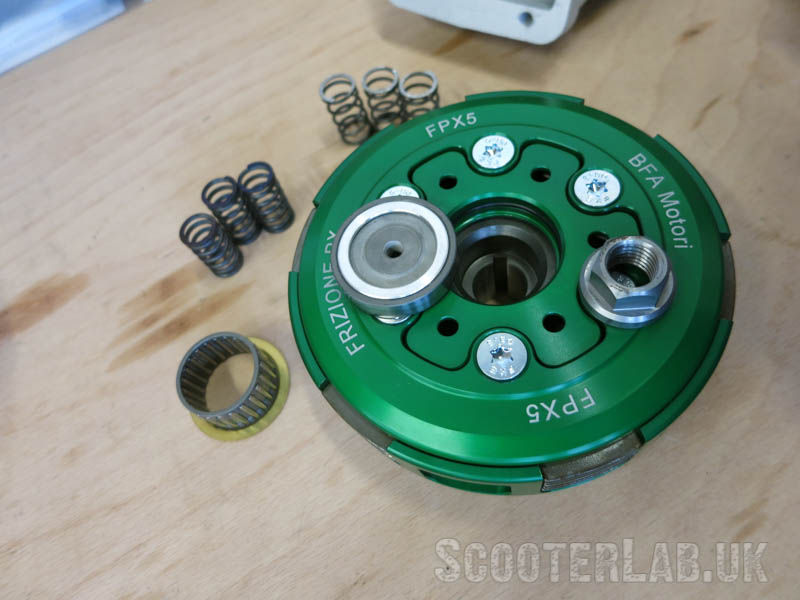
The BFA clutch systems are called FPX4 and FPX5. The FPX5 uses the plates from BFA’s 5-plate smallframe clutch. The FPX4 meanwhile uses Honda CR85 clutch discs. Both solutions are capable of handling very high power outputs.
The video above was shot in Venlo 2015, back then choice for replacement Lambretta engines was limited to the Targa Twin, or the BSG 305. Iggy got a quick test ride on Dean Orton’s BSG 305 demonstrator. Since then the world of scooter tuning has never been the same.
Could the BSG 305 Lambretta engine be making a BFA comeback? Sticky also gets to test ride a couple of smallframes and a tasty BFA PX. Make sure you don’t miss it.
Support SLUK and our advertisers
You pay nothing to enjoy the articles from SLUK. If you’d like to support us please share our articles on social media and either buy from the SLUK shop or our advertisers.








You just got to take your hat off (thatsxif you’re wearing one ) to those that carry the two stroke flag and breath fresh air into it …