
In 2009, as an engineering student, Felix decided to make a Vespa engine from billet as part of his university engineering course. He learned how to design in CAD and manufactured possibly the first large-frame Vespa engine to be carved from billet using CNC. The crankcase reedvalve motor was designed to accept a water-cooled Rotax power-valve cylinder.

El Sidney
The engine went on to become a custom scooter project called El Sidney which was wind-tunnel tested to check the efficiency of the sidepanel-mounted water-cooling system.


As you can imagine, Felix did well at university and was soon snapped up by industry, but the scooter scene never left his blood. He’s since become a successful racer in both the ESC series and the longer French and Spanish endurance races.

So, what do KR Automation make?
Not long after El Sidney, Felix started KR Automation to sell the CNC parts he’d designed. In 2012 he bought his first CNC machine and started to produce parts in-house.

Increase the flow
One of the inherent problems of the Vespa design is that there’s not much ‘head’ of fuel between the fuel tank and the carburettor.
Motorcycles have little problem with the fuel tank supplying a carb by gravity as the fuel tank is considerably higher than the carb so the fuel naturally wants to flow quite quickly.
On a Vespa, the situation is much different. When the scooter goes onto reserve the difference in level between the fuel in the tank and that in the carburettor float bowl is so small that fuel flow slows to a point where the engine is consuming fuel more quickly than it is being replenished. This is fuel starvation and it is very dangerous; resulting in holed pistons or engine seizures in a worst-case scenario.

This problem even affects standard scooters such as the Vespa T5, but once you start tuning an engine and increasing the rate at which fuel is consumed then you make the problem much worse.
The traditional solution to increase fuel flow on tuned Vespas is to fit a vacuum fuel pump, but this solution begins to get complex in terms of plumbing and because you need to drill the crankcase or inlet for the vacuum feed.

Vespa Fast Flow Fuel Tap
Another option to improve matters is by removing as many restrictions as possible, so that the flow rate is improved even with a low ‘head’ of fuel. The primary flow restriction is the fuel tap itself, so if you can make a faster tap you can reduce the likelihood of fuel starvation even without a fuel pump.
Lots of companies now make cast fast flow taps for Vespa and Lambretta with bigger orifices, but Felix is sure that his CNC tap is the fastest-flowing of them all.
The KR Automation tap isn’t cheap – 68 Euros – but Felix can sell all that he produces and was busy making more during our visit.


Did I mention that the fuel tap doesn’t even come with a filter gauze? In-line fuel filters are another restriction to flow, but Felix has come up with an incredibly clever solution.
The filter for the KR automation tap is like a large mesh ‘sock’ covering a flexible 3D-printed support skeleton. This support has a ring of magnets inserted which fix it securely to the fastening nut for the CNC fuel tap. You simply fit the tap using the Vespa tool to tighten the nut inside the tank and the sock just clicks into position afterwards. It is also removable for cleaning.
Ingenious…

Vespa Gear Selector Box
Those of you who run large-frame Vespas will already know how hard it is to get good quality gear selector boxes. In the past you had two main options: Genuine Piaggio or pattern.
The pattern Italian ones were often horrifically bad and best avoided, but the Piaggio ones – while they were made in Italy – were usable.
Then Piaggio went on a cost-cutting exercise for vintage spares and started sourcing them from all corners of Asia and at points produced some that were utterly incapable of functioning in their role as gear selectors. They don’t even make very good ashtrays.
We ran articles on SLUK about gear selector box differences here and also how to home-repair worn-out ones here.
Lately Piaggio have moved manufacturers to somewhere slightly less hopeless, but still they aren’t as good as they could – or should be – at holding a large-frame Vespa into gear.

Felix’s solution is to obtain OE-quality selector boxes, strip them down and remanufacture many of the critical components. The connection to the internal arm is no longer a tapered-pin, it’s now a precision fit onto the shaft and retained with a screw. The notches in the selector wheel are all re-machined by CNC to improve accuracy of selection and finally, the wheel and shaft are welded into position in a jig to ensure perfect alignment. Both early (up to ’83) and late (EFL/T5) versions are available.
These uprated gear selector boxes (and a selection of his other popular products) are available now in the UK through SLUK here. They’re also available through Felix’s own web-shop and also via all the big online scooter retailers including, SIP & Scooter Center.


Vespa ‘Polygon’ layshafts and hubs
Another problem afflicting high-performance Vespas and low-quality spare parts is the splined connection between the rear hub and its shaft. With a lot of power, or due to wear after the hub nut isn’t tightened correctly, it is possible for the splines in the rear hub to completely strip out.

It’s quite funny watching someone who has had this happen as they wonder why their scooter won’t ‘go’. The engine still selects gear fine, so they know the clutch hasn’t exploded! Then they look down at the rear hub and the nut and shaft are spinning but the wheel isn’t. You’re going nowhere like that!
The KR Automation solution is to convert the fine multi-spline hub connection to a ‘polygon’ which in this case is a kind of rounded triangle shape. This form of connection has proved popular in recent years with other Vespa parts producers as connections for primary drives and clutches.
The conversion requires a completely new, oversized layshaft and different rear hub bearing. An X-ray checked Piaggio hub is then machined with a matching polygon shape so that they mate very accurately, making it impossible for the shaft to spin within the hub.
The oversized M16 x 1.5mm threads on the shaft and supplied nuts are capable of being tightened to 110 Nm for increased security.
OK, perhaps you won’t need such a solution on a more modest engine, but those with radical sprinters or road scooters will love it. There’s also a dedicated version for the ridiculously powerful BFA engine.

Vespa Brake System
Felix is currently at the testing stage of a new front brake system that he’s been running for the past season in the scooter endurance races.
The brake features a delicious CNC alloy wheel and rim, bolting to either an ET4 or PX style disc carrier.
The special parts are the relatively thick 5.8mm disc and KR Automation 4-piston caliper. The latter has been developed with brake specialists from BMW in Munich. It uses Yamaha R1 pads. All the components are aimed at dissipating heat when endurance racing to prevent disc warping, fluid boiling or caliper distortion.

Come Here, There’s More!
It seems that once you get the hang of CAD design and CNC machining it becomes a bit of an addiction, and you start to wonder whether it’s worth machining pigs into small billet pork sausages. Someone should, the idea’s a wiener.
How about Lambretta owners?
That’s covered a fair few KR Automation Vespa products. In part two we’ll be taking a look at Felix’s Lambretta solutions. Keep your eye on SLUK tomorrow for part 2 of Sticky’s look at this CNC sorcery.
Words and photos: Sticky
We now sell KR Automation and plenty of scooter loveliness in the SLUK Shop
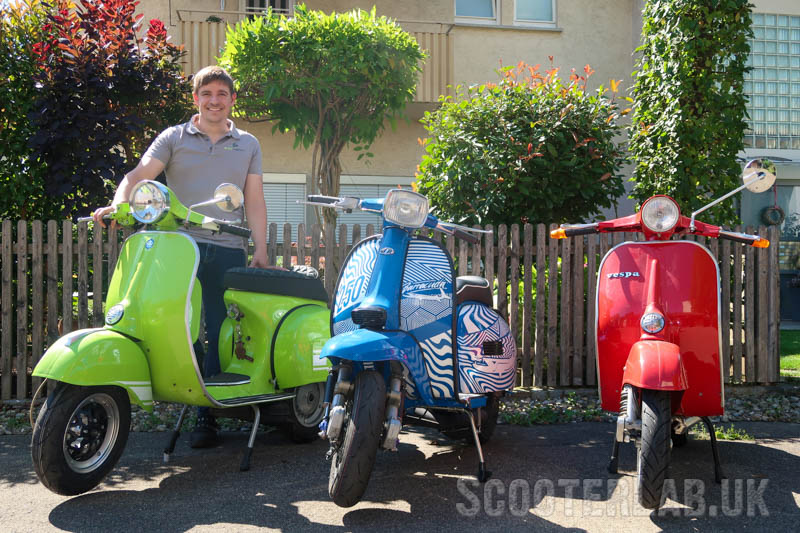 Felix Richter from KR Automation is yet another German scooterist with a fetish for milled metal parts. Who is he and how can his products improve your life?
In 2009, as an engineering student, Felix decided to make a Vespa engine from billet as part of his university engineering course. He learned how to design in CAD and manufactured possibly the first large-frame Vespa engine to be carved from billet using CNC. The crankcase reedvalve motor was designed to accept a water-cooled Rotax power-valve cylinder.
 Whilst most kids were still eating sweets, Felix was carving his own billet Vespa engine…
El Sidney
The engine went on to become a custom scooter project called El Sidney which was wind-tunnel tested to check the efficiency of the sidepanel-mounted water-cooling system.
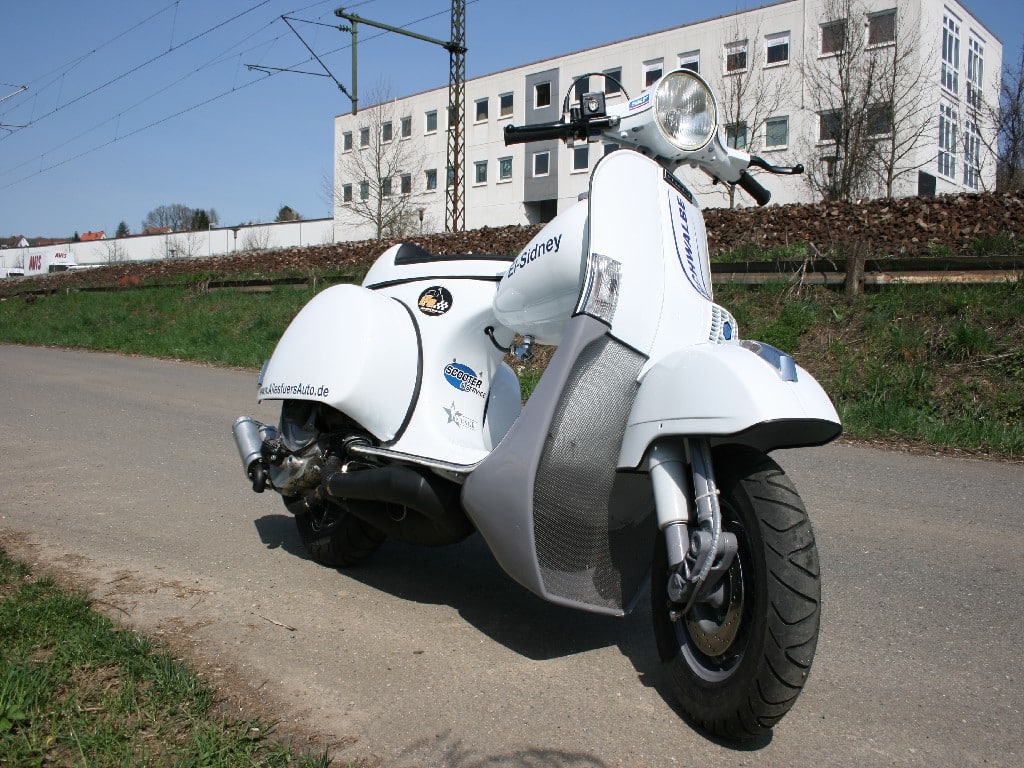 El Sidney – a 44hp Vespa and a claimed top speed in excess of 110mph
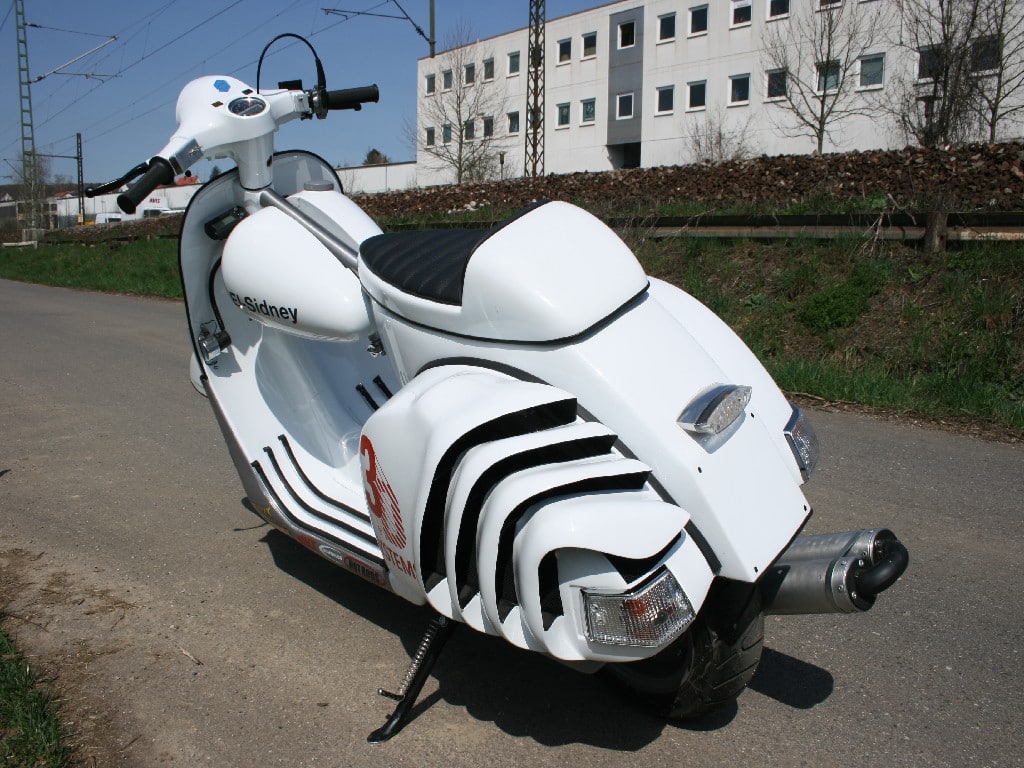 Strange vented panel is to allow air from the radiator to exit
As you can imagine, Felix did well at university and was soon snapped up by industry, but the scooter scene never left his blood. He’s since become a successful racer in both the ESC series and the longer French and Spanish endurance races.
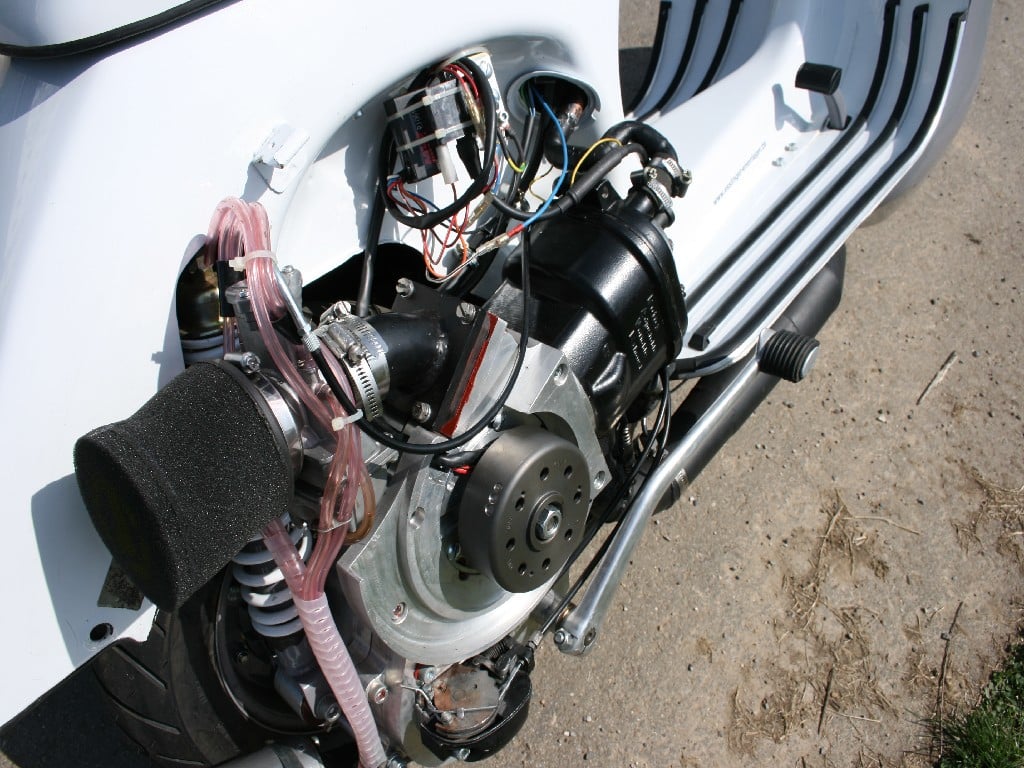 Rear-facing carburettor feeds the crankcase-mounted reedvalve
So, what do KR Automation make?
Not long after El Sidney, Felix started KR Automation to sell the CNC parts he’d designed. In 2012 he bought his first CNC machine and started to produce parts in-house.
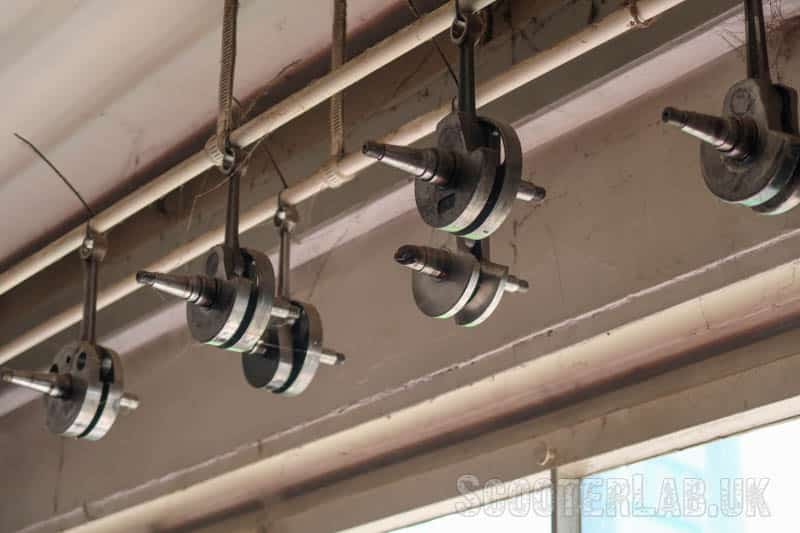 Offerings to the God of Speed
Increase the flow
One of the inherent problems of the Vespa design is that there’s not much ‘head’ of fuel between the fuel tank and the carburettor.
Motorcycles have little problem with the fuel tank supplying a carb by gravity as the fuel tank is considerably higher than the carb so the fuel naturally wants to flow quite quickly.
On a Vespa, the situation is much different. When the scooter goes onto reserve the difference in level between the fuel in the tank and that in the carburettor float bowl is so small that fuel flow slows to a point where the engine is consuming fuel more quickly than it is being replenished. This is fuel starvation and it is very dangerous; resulting in holed pistons or engine seizures in a worst-case scenario.
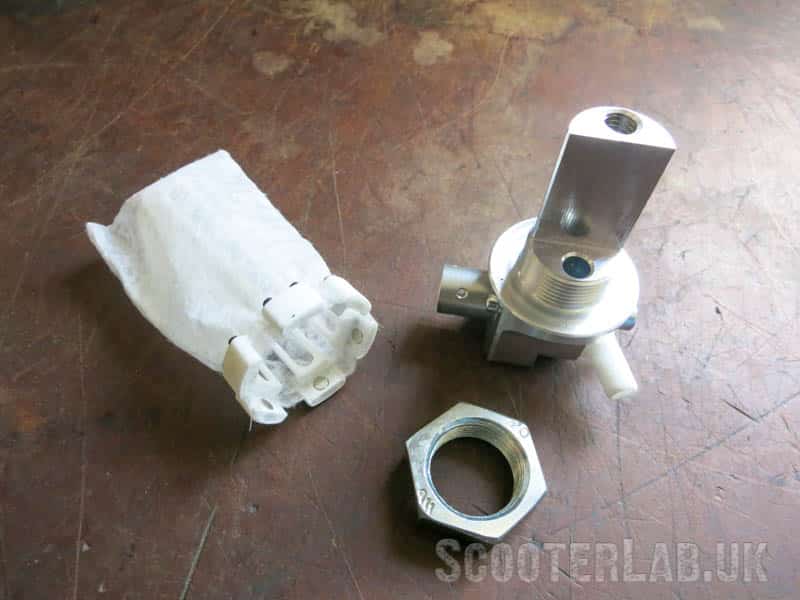 KR Vespa fuel tap and filter sock
This problem even affects standard scooters such as the Vespa T5, but once you start tuning an engine and increasing the rate at which fuel is consumed then you make the problem much worse.
The traditional solution to increase fuel flow on tuned Vespas is to fit a vacuum fuel pump, but this solution begins to get complex in terms of plumbing and because you need to drill the crankcase or inlet for the vacuum feed.
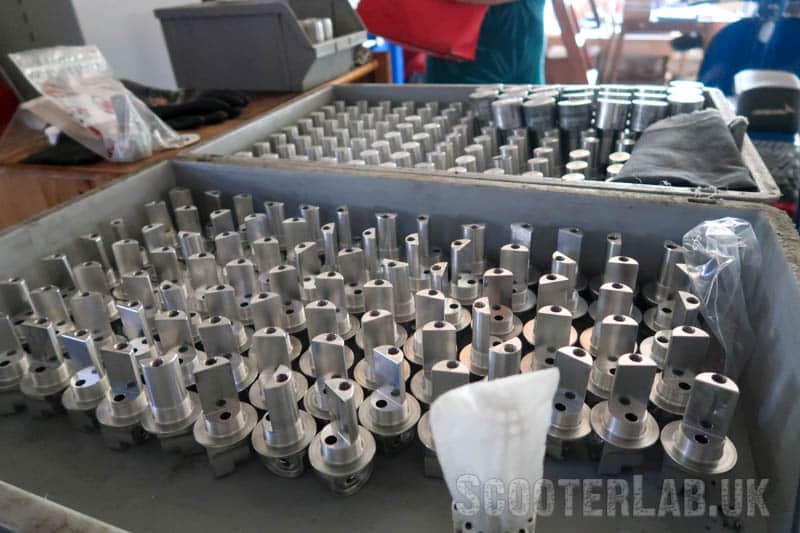 Blank billets and finished taps after machining
Vespa Fast Flow Fuel Tap
Another option to improve matters is by removing as many restrictions as possible, so that the flow rate is improved even with a low ‘head’ of fuel. The primary flow restriction is the fuel tap itself, so if you can make a faster tap you can reduce the likelihood of fuel starvation even without a fuel pump.
Lots of companies now make cast fast flow taps for Vespa and Lambretta with bigger orifices, but Felix is sure that his CNC tap is the fastest-flowing of them all.
The KR Automation tap isn’t cheap – 68 Euros – but Felix can sell all that he produces and was busy making more during our visit.
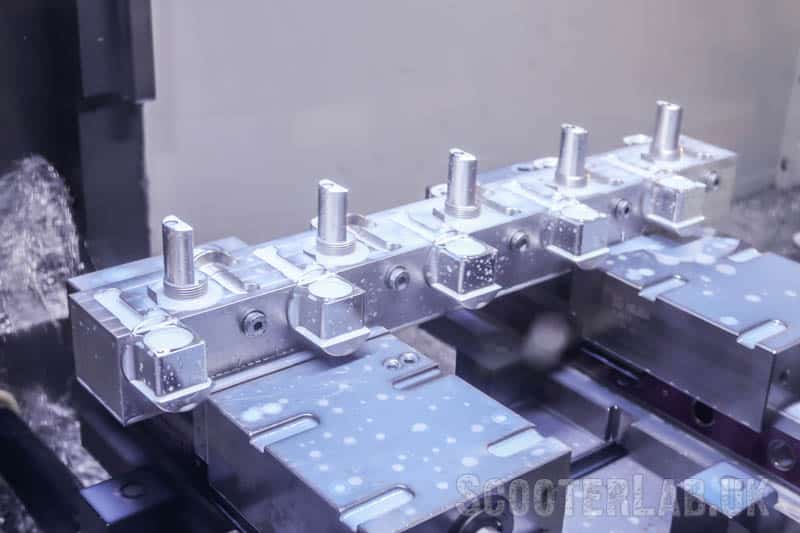 This fixture holds 15 taps at a time on 3 different positions depending on the stage of the job
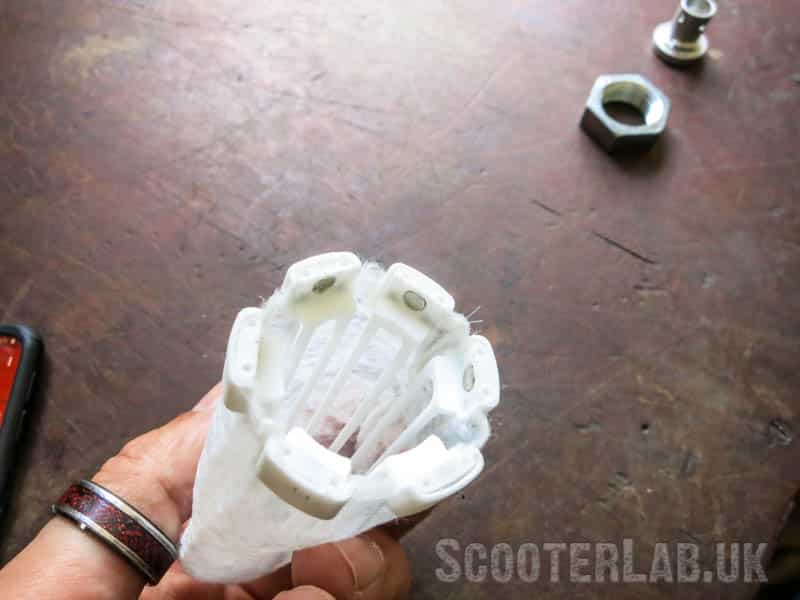 Petrol-proof 3D printed core with magnetic fixings
Did I mention that the fuel tap doesn’t even come with a filter gauze? In-line fuel filters are another restriction to flow, but Felix has come up with an incredibly clever solution.
The filter for the KR automation tap is like a large mesh ‘sock’ covering a flexible 3D-printed support skeleton. This support has a ring of magnets inserted which fix it securely to the fastening nut for the CNC fuel tap. You simply fit the tap using the Vespa tool to tighten the nut inside the tank and the sock just clicks into position afterwards. It is also removable for cleaning.
Ingenious…
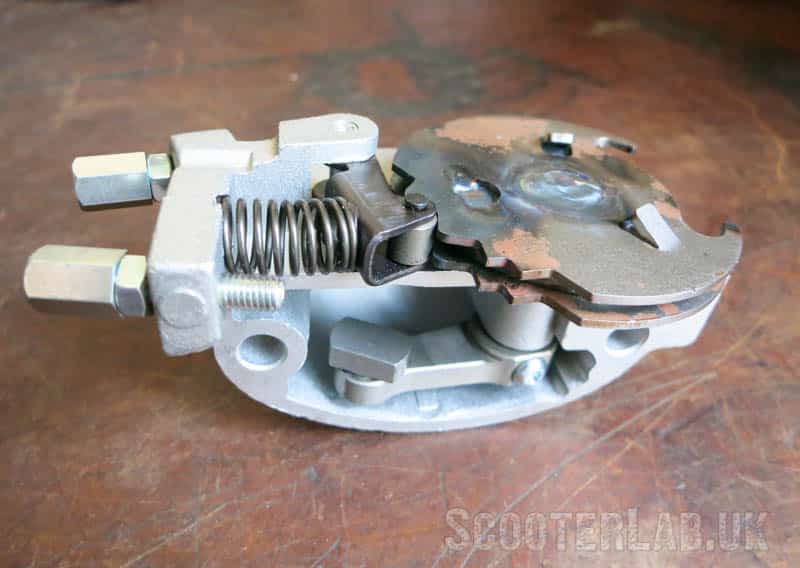 Vespa Gear Selector Box
Vespa Gear Selector Box
Those of you who run large-frame Vespas will already know how hard it is to get good quality gear selector boxes. In the past you had two main options: Genuine Piaggio or pattern.
The pattern Italian ones were often horrifically bad and best avoided, but the Piaggio ones – while they were made in Italy – were usable.
Then Piaggio went on a cost-cutting exercise for vintage spares and started sourcing them from all corners of Asia and at points produced some that were utterly incapable of functioning in their role as gear selectors. They don’t even make very good ashtrays.
We ran articles on SLUK about gear selector box differences here and also how to home-repair worn-out ones here.
Lately Piaggio have moved manufacturers to somewhere slightly less hopeless, but still they aren’t as good as they could – or should be – at holding a large-frame Vespa into gear.
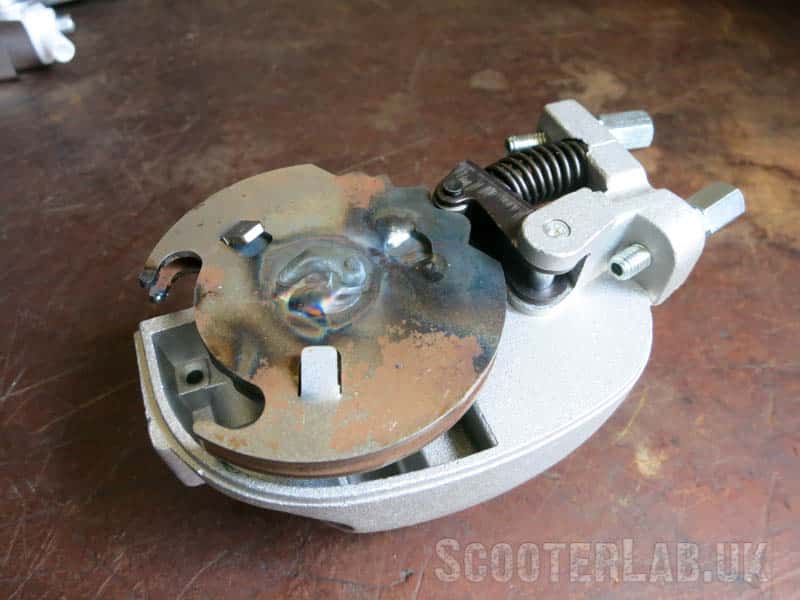 KR Automation selector box. The centre shaft is welded into place with the arm correctly aligned.
Felix’s solution is to obtain OE-quality selector boxes, strip them down and remanufacture many of the critical components. The connection to the internal arm is no longer a tapered-pin, it’s now a precision fit onto the shaft and retained with a screw. The notches in the selector wheel are all re-machined by CNC to improve accuracy of selection and finally, the wheel and shaft are welded into position in a jig to ensure perfect alignment. Both early (up to ’83) and late (EFL/T5) versions are available.
These uprated gear selector boxes (and a selection of his other popular products) are available now in the UK through SLUK here. They’re also available through Felix’s own web-shop and also via all the big online scooter retailers including, SIP & Scooter Center.
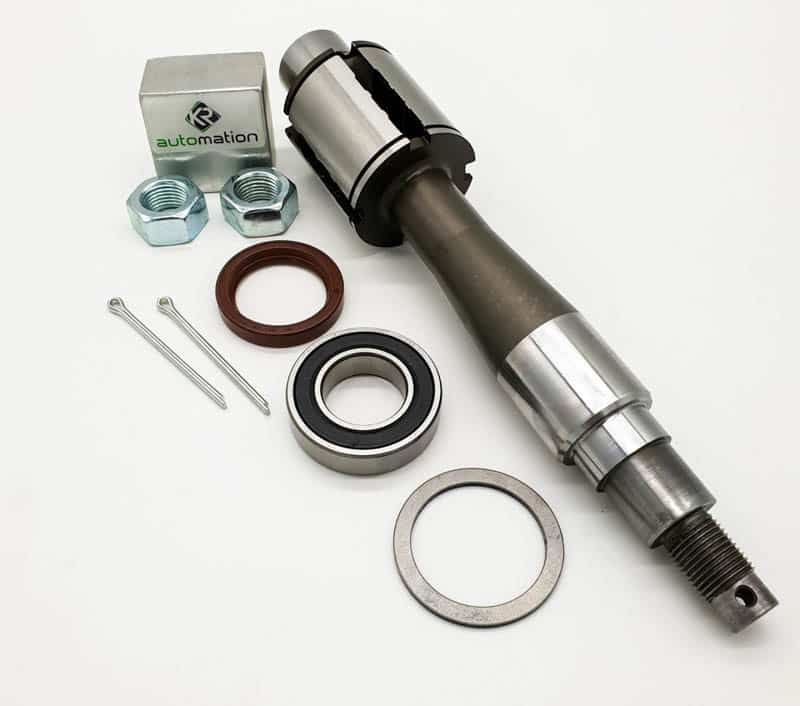 KR Automation Vespa largeframe output shaft



Vespa ‘Polygon’ layshafts and hubs
Another problem afflicting high-performance Vespas and low-quality spare parts is the splined connection between the rear hub and its shaft. With a lot of power, or due to wear after the hub nut isn’t tightened correctly, it is possible for the splines in the rear hub to completely strip out.
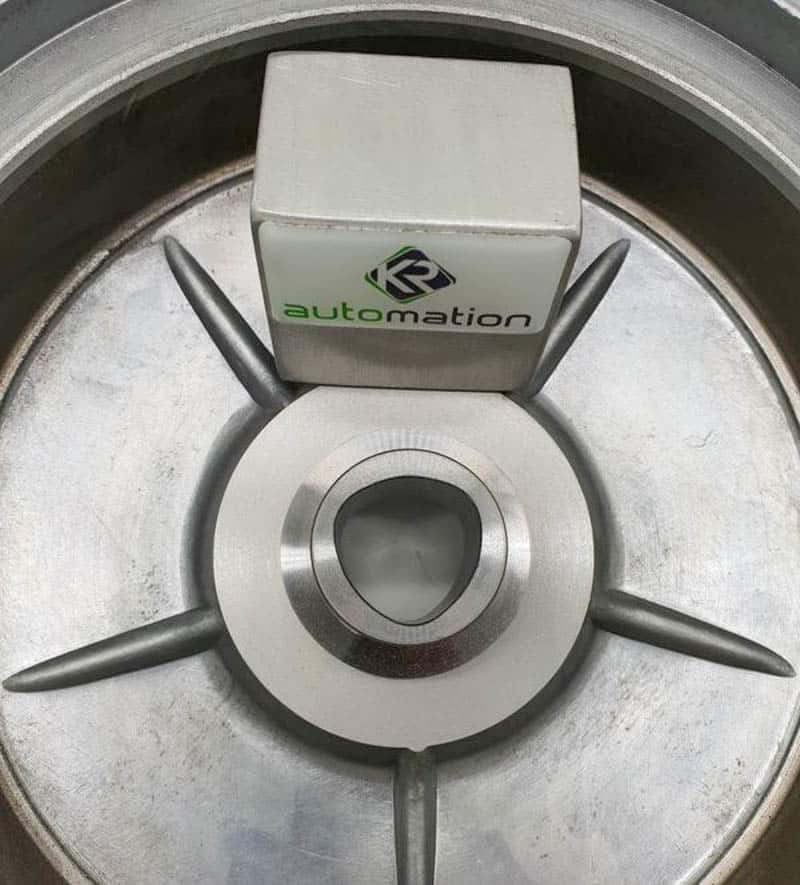 A genuine Vespa PX hub machined for a polygonal drive shaft
It’s quite funny watching someone who has had this happen as they wonder why their scooter won’t ‘go’. The engine still selects gear fine, so they know the clutch hasn’t exploded! Then they look down at the rear hub and the nut and shaft are spinning but the wheel isn’t. You’re going nowhere like that!
The KR Automation solution is to convert the fine multi-spline hub connection to a ‘polygon’ which in this case is a kind of rounded triangle shape. This form of connection has proved popular in recent years with other Vespa parts producers as connections for primary drives and clutches.
The conversion requires a completely new, oversized layshaft and different rear hub bearing. An X-ray checked Piaggio hub is then machined with a matching polygon shape so that they mate very accurately, making it impossible for the shaft to spin within the hub.
The oversized M16 x 1.5mm threads on the shaft and supplied nuts are capable of being tightened to 110 Nm for increased security.
OK, perhaps you won’t need such a solution on a more modest engine, but those with radical sprinters or road scooters will love it. There’s also a dedicated version for the ridiculously powerful BFA engine.
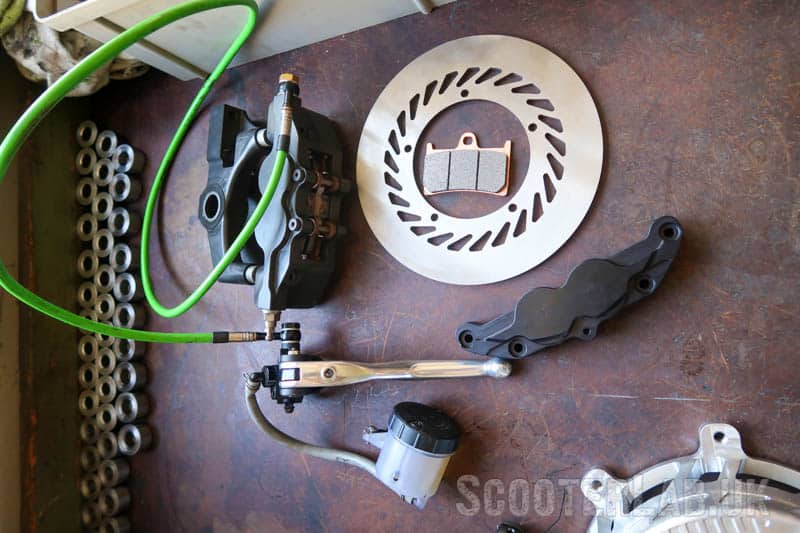 Home-made radial brake caliper
Vespa Brake System
Felix is currently at the testing stage of a new front brake system that he’s been running for the past season in the scooter endurance races.
The brake features a delicious CNC alloy wheel and rim, bolting to either an ET4 or PX style disc carrier.
The special parts are the relatively thick 5.8mm disc and KR Automation 4-piston caliper. The latter has been developed with brake specialists from BMW in Munich. It uses Yamaha R1 pads. All the components are aimed at dissipating heat when endurance racing to prevent disc warping, fluid boiling or caliper distortion.
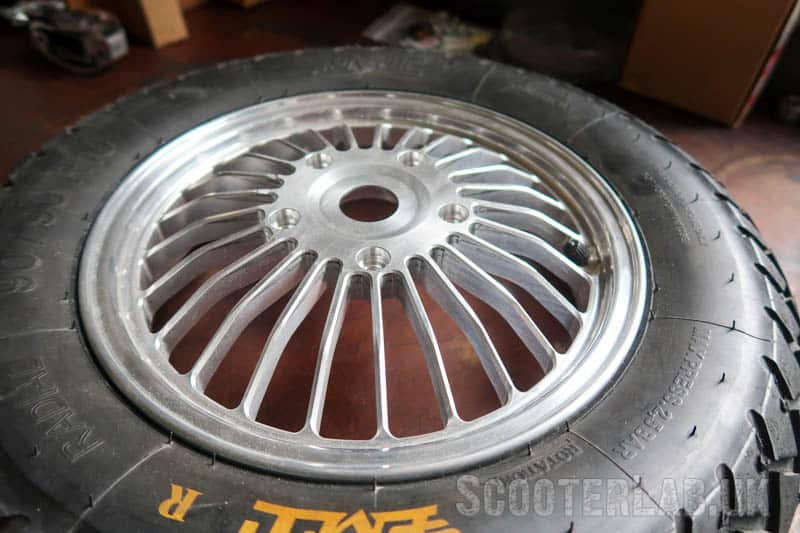 Stunning KR Automation CNC aluminium tubeless wheel for Vespa
Come Here, There’s More!
It seems that once you get the hang of CAD design and CNC machining it becomes a bit of an addiction, and you start to wonder whether it’s worth machining pigs into small billet pork sausages. Someone should, the idea’s a wiener.
How about Lambretta owners?
That’s covered a fair few KR Automation Vespa products. In part two we’ll be taking a look at Felix’s Lambretta solutions. Keep your eye on SLUK tomorrow for part 2 of Sticky’s look at this CNC sorcery.
Words and photos: Sticky
We now sell KR Automation and plenty of scooter loveliness in the SLUK Shop
-
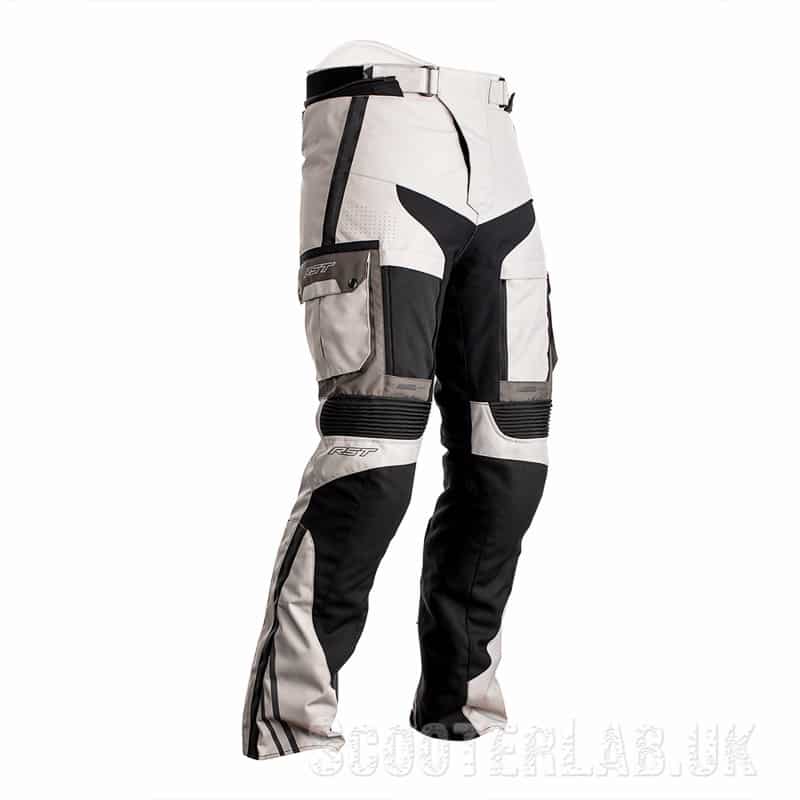
RST PRO SERIES ADVENTURE-X CE MENS TEXTILE JEAN
£219.99 -
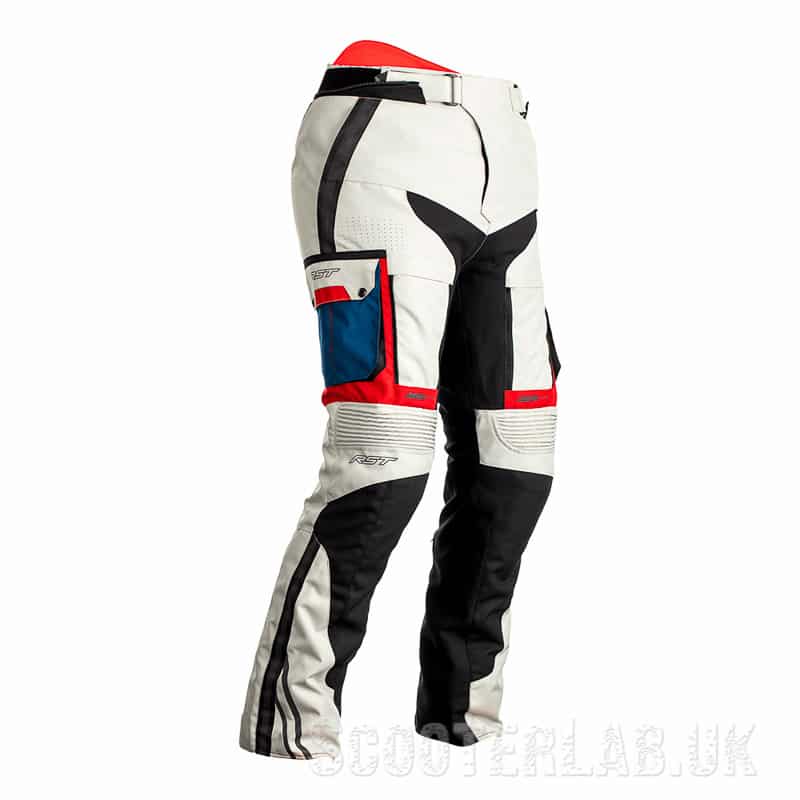
RST PRO SERIES ADVENTURE-X CE LADIES TEXTILE JEAN
£219.99 -
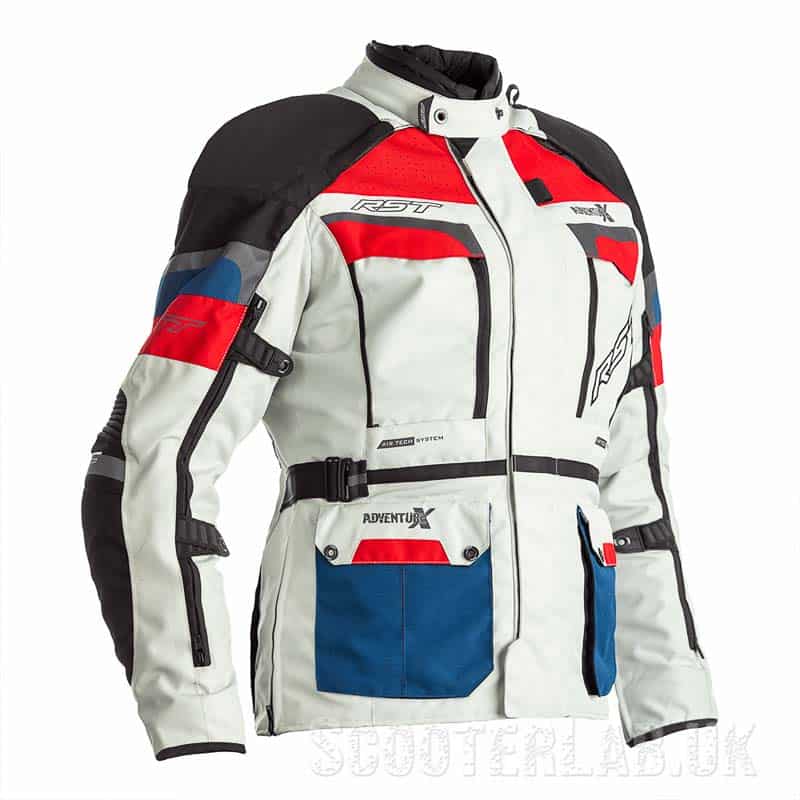
RST PRO SERIES ADVENTURE-X CE LADIES TEXTILE JACKET
£299.99 -
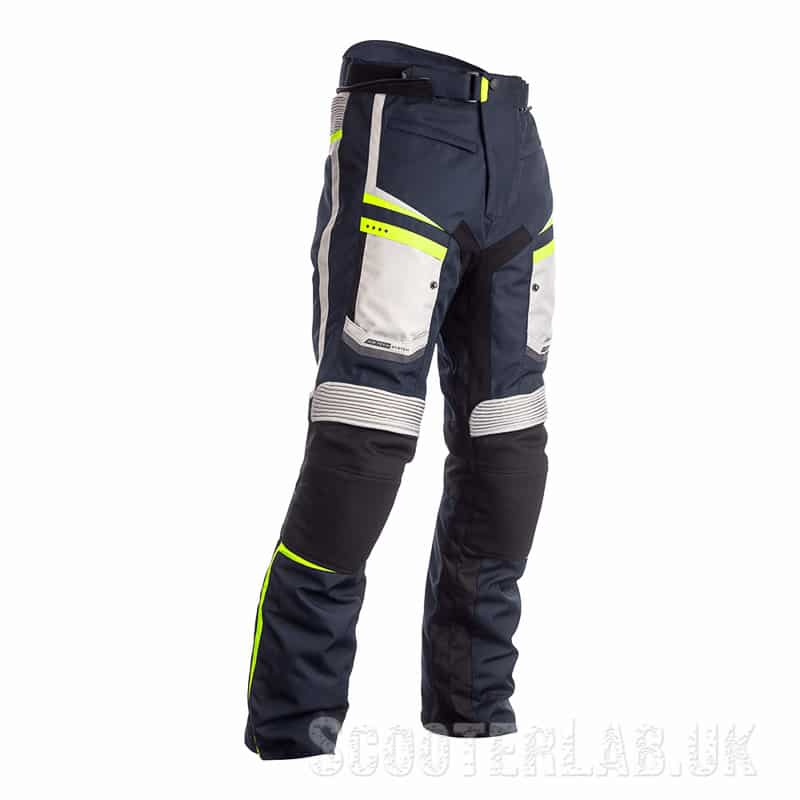
RST MAVERICK CE LADIES TEXTILE JEAN
£149.99 -
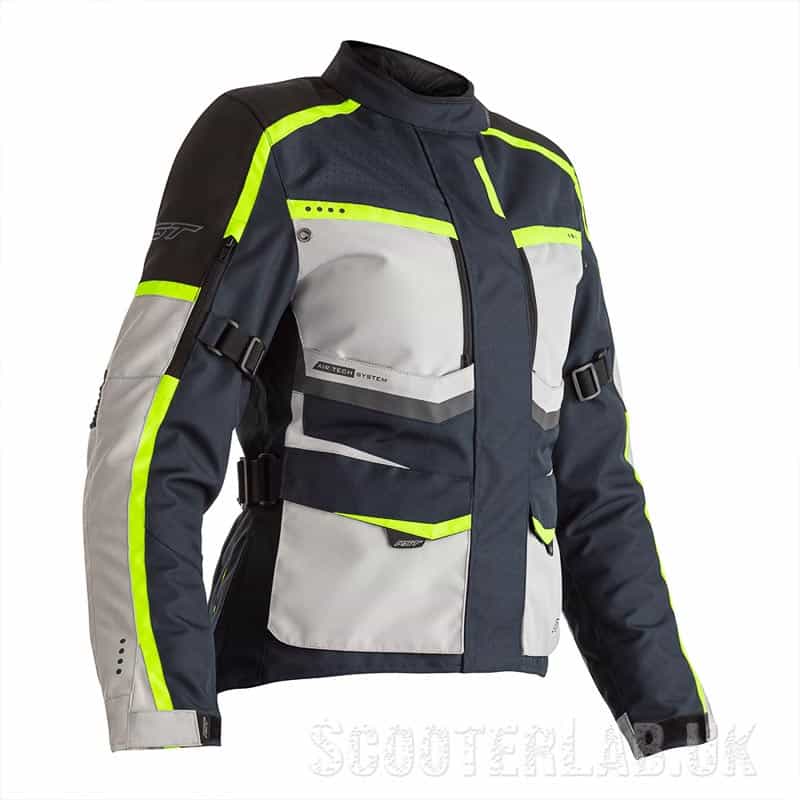
RST MAVERICK CE LADIES TEXTILE JACKET
£199.99 -
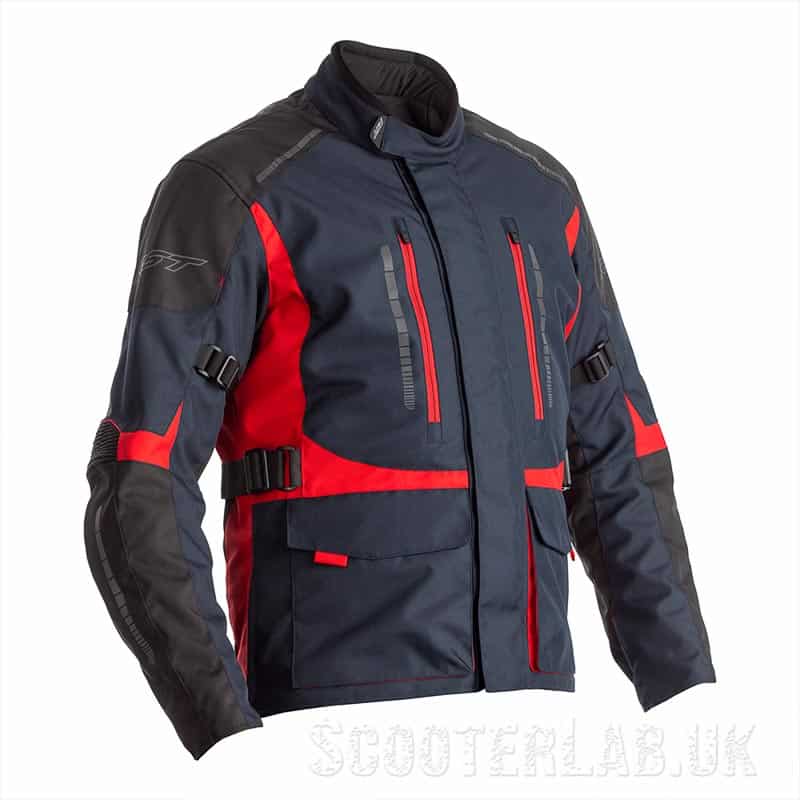
RST ATLAS CE MENS TEXTILE JACKET
£149.99