
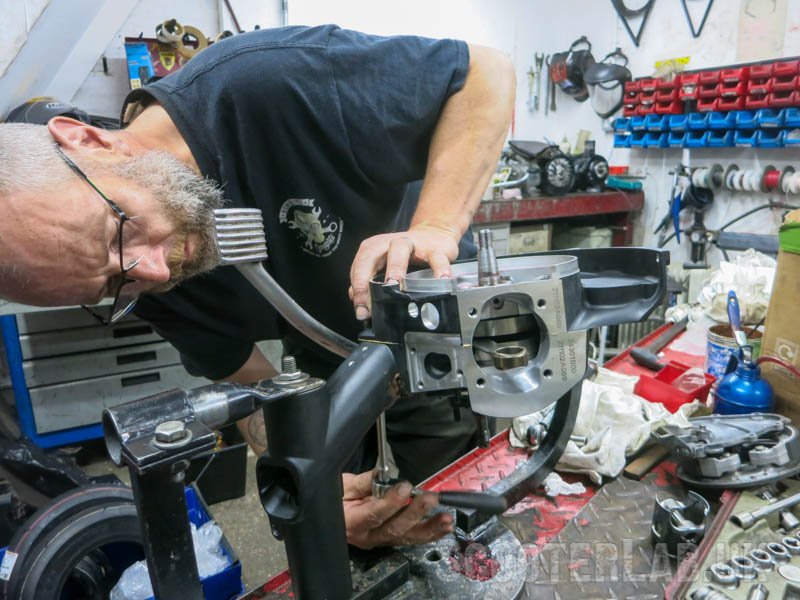
SIP’s latest casing is a boon to those building performance smallframe engines. The Evo version is pre-equipped with many of the modifications that a tuner would previously do to standard engine casings. It’s also available in black. Which is nice.
• PK 3-stud type inlet, for 47mm O.D. flywheel bearing (20mm shaft cranks)*
*= these casings can be fitted to early smallframes running the carb inside the frame, only if used with a SIP conversion inlet manifold.
^ = this casing can be used in early smallframes together with the original manifold and all types of stator. It features the standard small inlet port with original timings so it can be used legally as a replacement part with TüV approval.
**= this casing has a completely flat crankcase mouth permitting easy matching to most big-bore cylinders without need for welding. Note that Evo casings can only be used with a modified stator base plate.
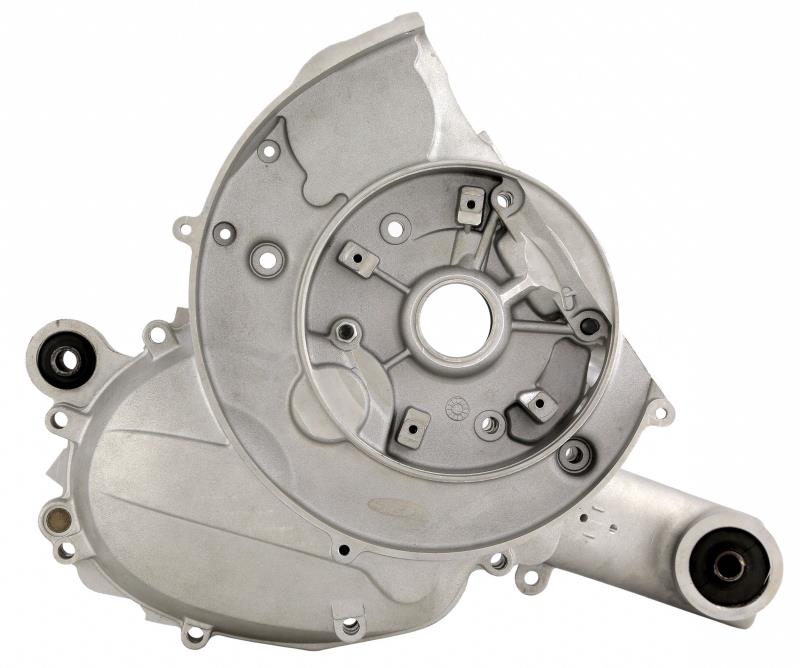
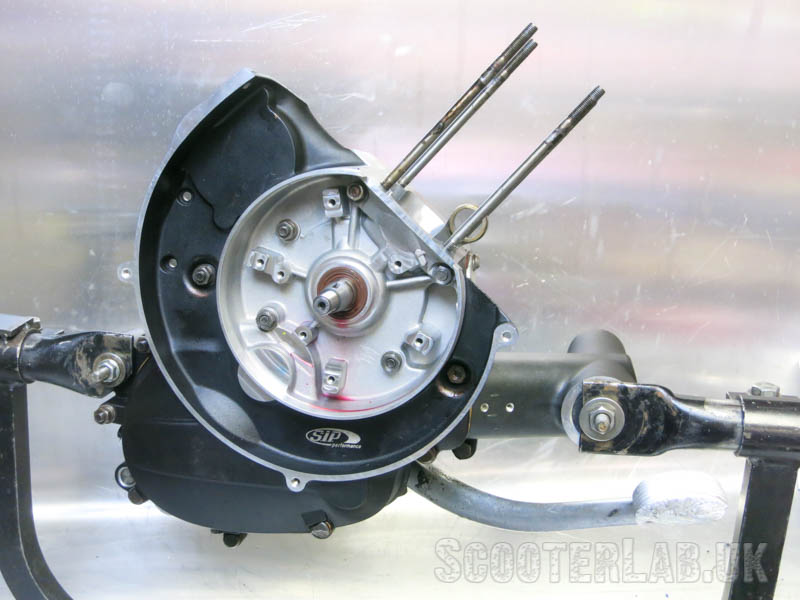
In our circumstance, it was because the casings were worn out. The drive-side main crankshaft bearing was so loose in the casing that it could be pushed out by hand. That’s a problem that will only get worse.
TOP TIP: The above problem is why many high-performance kit manufacturers specify C4 crankshaft bearings; which have increased radial clearance compared to C3 bearings. C4 bearings feel baggy and loose when new but the clearance naturally tightens and corrects when the bearing is run at very high temperatures and speeds as the rolling elements expand. Fitting the drive-side bearing with a little Bearing Fit Loctite also helps to prevent them spinning.
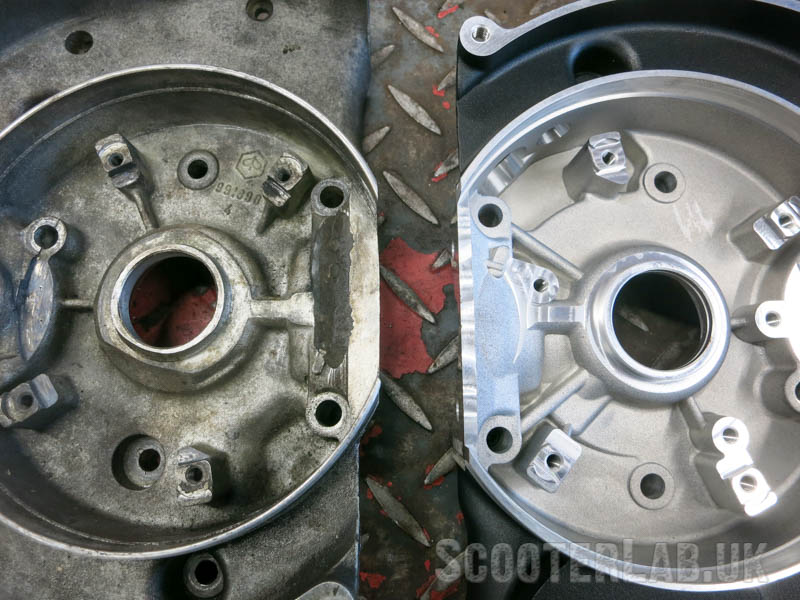
The other issue with our old casings was that the hole for the gear selector shaft was worn. This is a common problem across the smallframe range. A steel shaft running directly in aluminium, lubricated by an abrasive soup of gearbox oil and road grit, is a recipe for wear. If you can grab the pulley, where the gear cables connect, and move the shaft backwards and forwards, then the casing hole is ovalised.
The standard result of wear to the gear selector shaft hole is an oil leak. It’s asking a lot of a simple o-ring to seal that shaft once the casing has become very worn.
One great thing about the new SIP casings is that they’ve thought about this problem. The gear selector already runs in a bush pressed into the casing. Not only is the bronze bush on the SIP casings more resilient to wear than bare aluminium, but it is also replaceable. New bronze bushes are available for €14. This is a good solution to an age-old problem.
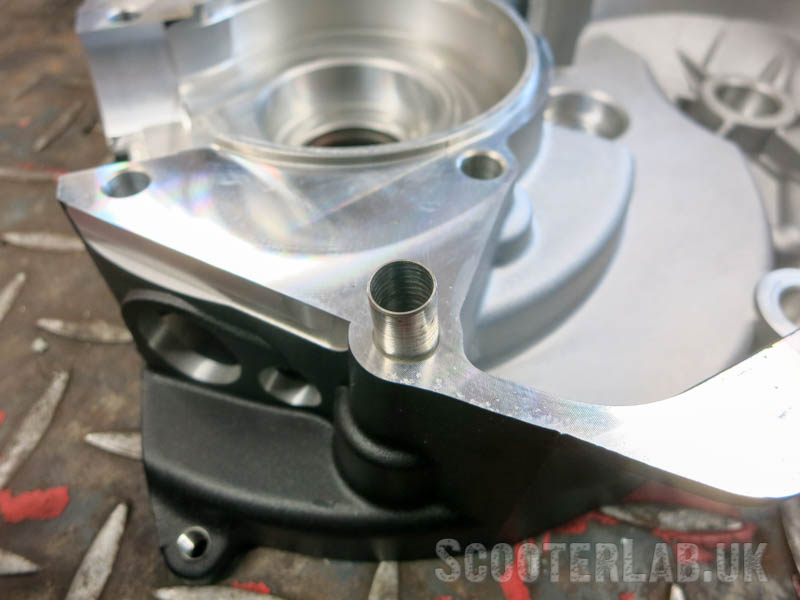
Another subtle difference on the SIP casings is an additional steel dowel at the front of the casing aimed at improving the alignment of the two casing halves. This solution works. The only consequence is that any normal gaskets you fit are likely to have too small a hole over the dowel position and therefore must be opened out.
ANOTHER WAY: SIP make a dedicated gasket to suit with an enlarged hole in the dowel position, part 92975100.

A typical racing upgrade is to use 3.50-10 rather than the standard 3.00-10 tyres, but this often meant grinding metal from the swinging arm of the casing for tyre clearance. The SIP casing is cast with a recess in that position to readily accommodate 3.50-10 tyres.
The SIP casings also feature additional internal ribbing to improve overall stiffness.
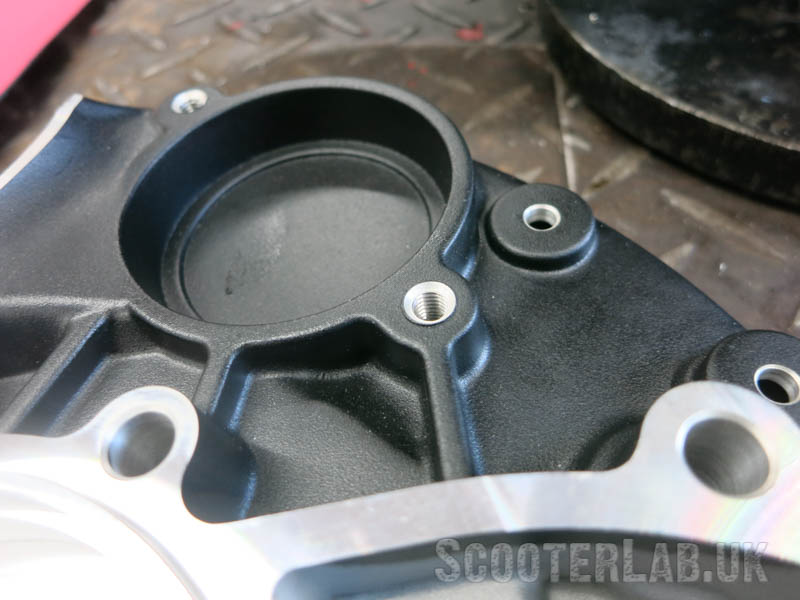
For our needs (fitting a Quattrini M1-L with 54mm stroke crank for endurance racing) the best solution appeared to be the SIP Evo casings because they are short-cut to achieving some of the modifications that we would normally do to smallframe casings to fit a powerful kit:
• The raised circular dust shield ring for sealing the ignition is cut away next to the crankcase mouth to make the whole area totally flat
• Extra material is added around the transfers to allow for grinding to match high-performance cylinders without ‘breaking through’
• We chose the version with a 47mm flywheel bearing recess so we could use an NU204 C3 split bearing to match our 20mm shaft crankshaft
• We specified a black casing, which looks cool; particularly in a black scooter




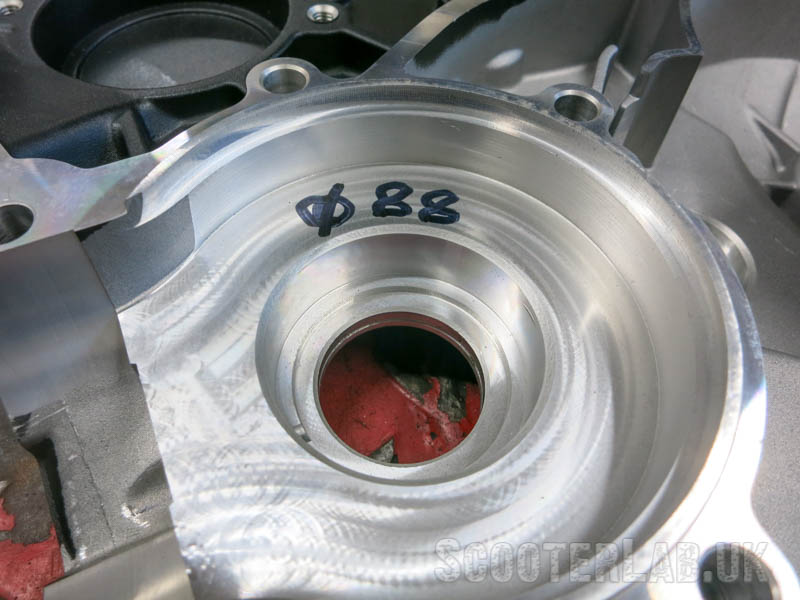
Additional Machining
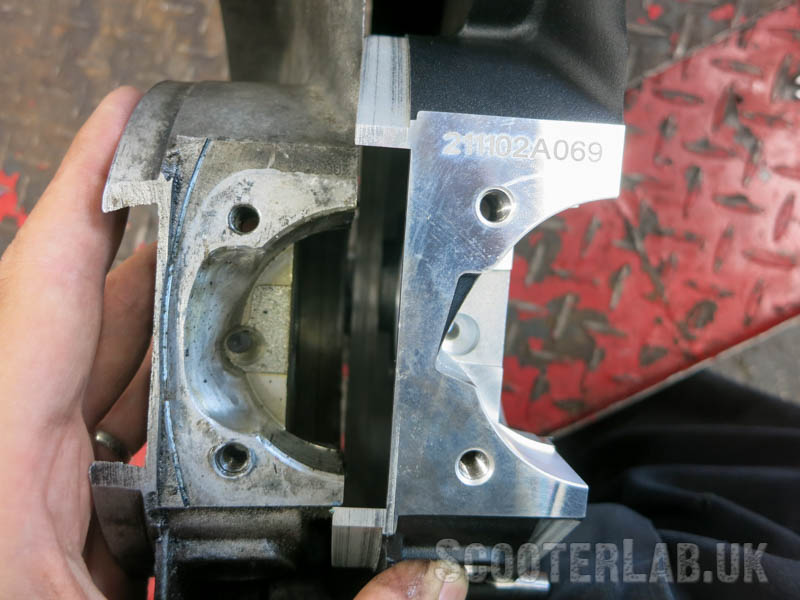
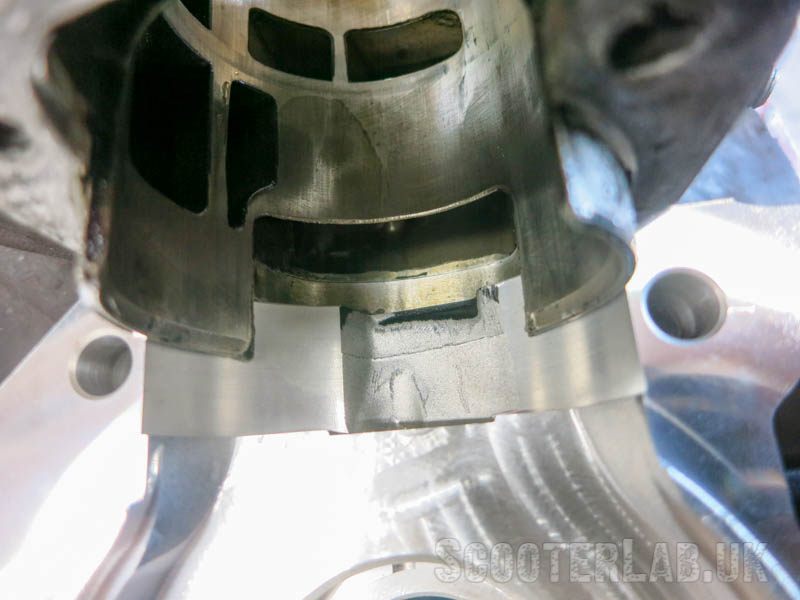
Since SIP casings are set up for standard rotary-valve crankshafts – which have a smaller diameter crankweb on the flywheel side – we still needed to get the casings machined. Our 54mm stroke crankshaft has 87mm diameter webs on both sides, which means the flywheel side casing must be machined to accommodate, and additional clearance given to the drive side for the 105mm conrod.
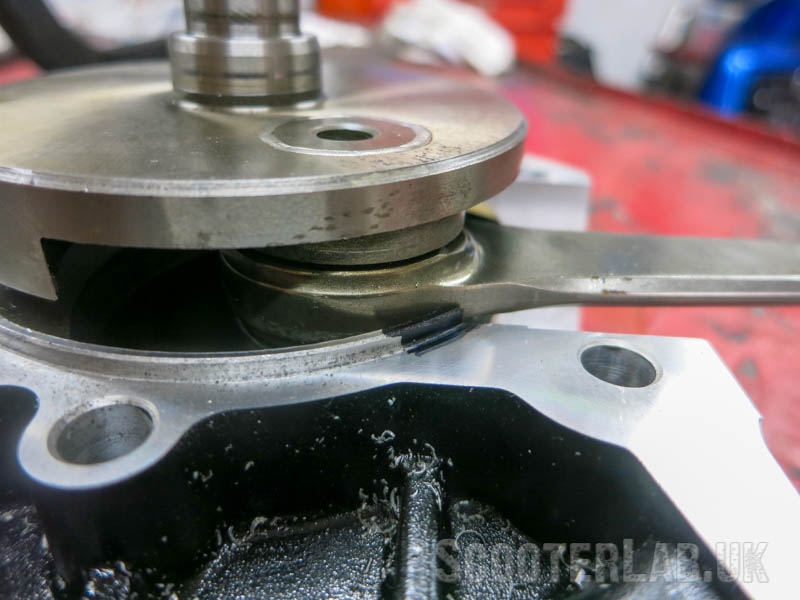
Further material (marked) also needs removing from both casing halves to accommodate a 105mm rod. It’s a hard job to carve all this with a grinder but it can be done, however, local engineer Phil March came through for us and machined the casing for us on the same day. Only after the stress of getting that organised in a hurry did Andre at SIP mention that they’ve just started to offer SIP Evo crankcases pre-machined for 54mm and 56mm cranks. If only we’d known…
Read part 2
It’s fair to say that the rest of this engine build didn’t quite go as smoothly as we’d like so you can read about the THREE, yes THREE engine builds in part 2 here.